Side-by-side or overlay PDF diff driven by one engine that reads each file into a structured model — text, vector geometry, images, form fields, annotations — and compares the models. Moves show as moves, edits show only where they happened, and any PDF type works without picking a mode.
Open a STEP / STP part and it measures itself — volume, thinnest wall, draft and undercut checks on load, plus hole detection with a BOM. Measure, section, export STL. Rust + WASM B-rep kernel, runs in your browser.
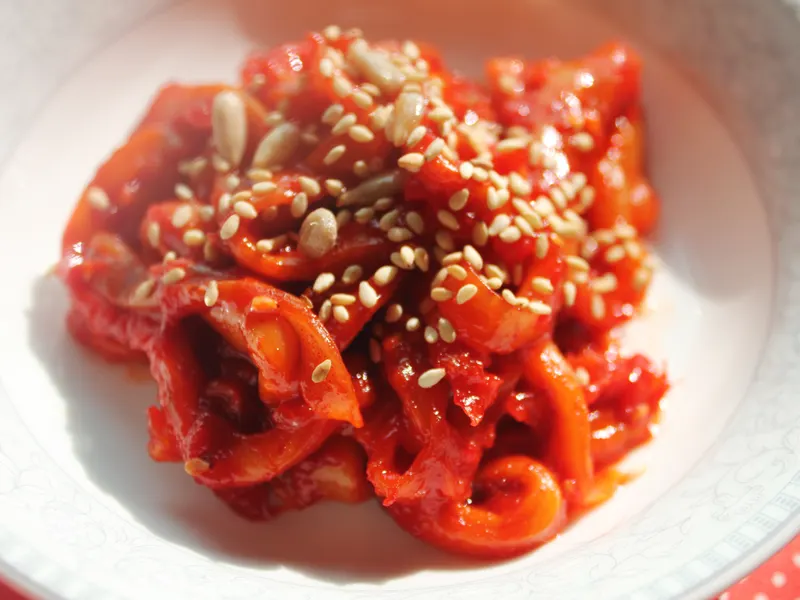
Ojingeo-jeot is squid that is cleaned, salted and left to ripen, then cut into strips and seasoned with chilli and garlic. Traditional jeotgal is salted at 15–25 %; a 1993 study found the seasoned squid jeotgal made in Korea at only about 8 % salt, which needed careful handling in distribution.
What changes:Starting material: squid, skinned, gutted and washed
Step 1 of 4
Skin, gut and wash the squid
Time
Not documented
Temperature
Not documented
Salt
None given
Acidity
Not documented
Which microbes the steps name, step by step
Leuconostoc
Bacillus
Flavour
Not documented
Texture
Not documented
Colour
Not documented
Microbes at work in this step
Not documented for this step.
Method
Measured measured in a studySet fixed by a specification or tested recipeReported one source reports itTypical a general value, not sourced for this fermentUnconfirmed not yet checked against a source
At a glance
Ojingeo-jeot is squid that is cleaned, salted and left to ripen, then cut into strips and seasoned with chilli and garlic. Traditional jeotgal is salted at 15–25 %; a 1993 study found the seasoned squid jeotgal made in Korea at only about 8 % salt, which needed careful handling in distribution. Made in 4 steps over 41 days. The longest step, salt and ripen, takes 41 days (Lee K.G 2012) and runs at -1–10 °C (Lee K.G 2012). Salt is 3–5 % (Lee K.G 2012). Leuconostoc does most of the fermenting.
Traditional jeotgal is made with 15–20 % salt (Lee 2012) or about 25 % (Kim 1993). The seasoned squid jeotgal in Kim's 1993 study had only about 8 % salt, so it needed careful handling when sold.
Low-salt squid jeotgal (3–5 % salt)Kept 23 to 52 days depending on salt and storage temperature; quality close to commercial high-salt squid jeotgal.
Safety
Low-salt squid jeotgal is perishable. A study of seasoned squid jeotgal with about 8 % salt estimated its shelf life at about 3 days at 30 °C, 7 days at 20 °C and 25 days at 10 °C, so keep it refrigerated. Those figures are for spoilage and do not cover parasites. Japan's health ministry lists squid among seafood that carries Anisakis worm larvae, which can burrow into the stomach or gut wall. It says ordinary salting does not kill them, and it advises freezing at -20 °C for at least 24 hours. Nothing in these steps cooks the squid.