Side-by-side or overlay PDF diff driven by one engine that reads each file into a structured model — text, vector geometry, images, form fields, annotations — and compares the models. Moves show as moves, edits show only where they happened, and any PDF type works without picking a mode.
Open a STEP / STP part and it measures itself — volume, thinnest wall, draft and undercut checks on load, plus hole detection with a BOM. Measure, section, export STL. Rust + WASM B-rep kernel, runs in your browser.
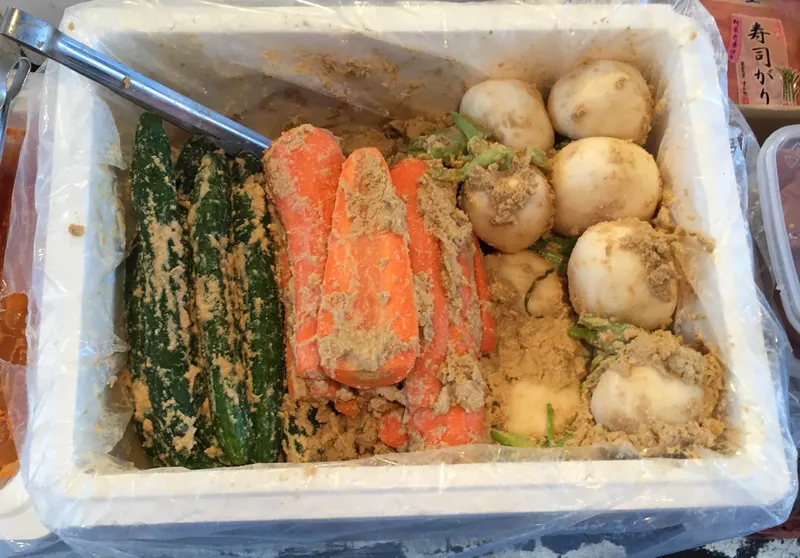
Rice bran is kneaded with salted water into a bed, the nukadoko, that is fed vegetables and stirred every day. Lactic bacteria take over the bed within about a month, and vegetables buried in it for a day come out lightly sour and salty.
Households also add citrus peel or astringent persimmon peel[kitakyushu]
Vegetables to pickleAbout a day per batch
Cucumber halves, cabbage pieces or quartered Japanese radish[sugiura2024]
Starter
spontaneous, or a portion of an old bed (tsugidane)
Total time across the recorded steps: 41 days
Start
Drag the bar or press Play
What changes:Salted water is kneaded into the rice bran until it is an even, damp bed
Step 1 of 5
Knead the bran bed
Time
Not documented
Temperature
Not documented
Salt
6 %
Measured
Acidity
Not documented
Which microbes the steps name, step by step
Pediococcus pentosaceus
Weissella
L. plantarum
Weissella confusa
Latilactobacillus sakei
Output: a damp bran bed.
Flavour
Not documented
Texture
Not documented
Colour
Not documented
Microbes at work in this step
Not documented for this step.
Method
Measured measured in a studySet fixed by a specification or tested recipeReported one source reports itTypical a general value, not sourced for this fermentUnconfirmed not yet checked against a source
At a glance
Rice bran is kneaded with salted water into a bed, the nukadoko, that is fed vegetables and stirred every day. Lactic bacteria take over the bed within about a month, and vegetables buried in it for a day come out lightly sour and salty. Made in 5 steps over 41 days. The longest step, ripen the bed, feeding it vegetables, takes 40 days (Sugiura S 2024) and runs at 24 °C (Sugiura S 2024). Salt is 6 % (Sugiura S 2024). Lactiplantibacillus plantarum, dominant in the mature bed and in the pickles and Pediococcus pentosaceus, early to middle stage do most of the fermenting.
Nukazuke uses a living bed that is reused for years, not a one-off batch, and each vegetable stays only a day or so. Takuan, by Japan's JAS definition, is a bran pickle of daikon that was first sun-dried or pressed with salt.
Nukamiso-dakiKokura (Kitakyushu) dish of sardine or mackerel simmered with a scoop of mature bed.
Safety
The bed's acid and salt protect the short pickle. In one study the bed fell from pH 6.0 to 4.0 and started at about 6 % salt, and the pickles held 1–3 % salt. Stir the bed daily; left unstirred, its layers grow different microbes.
A record from 1626 says Hosokawa Tadatoshi, lord of Kokura Castle, sent a nukadoko to his father Tadaoki. In Kokura, nukazuke was a preserved food of the Ogasawara domain that spread from old families to ordinary households.