Side-by-side or overlay PDF diff driven by one engine that reads each file into a structured model — text, vector geometry, images, form fields, annotations — and compares the models. Moves show as moves, edits show only where they happened, and any PDF type works without picking a mode.
Open a STEP / STP part and it measures itself — volume, thinnest wall, draft and undercut checks on load, plus hole detection with a BOM. Measure, section, export STL. Rust + WASM B-rep kernel, runs in your browser.
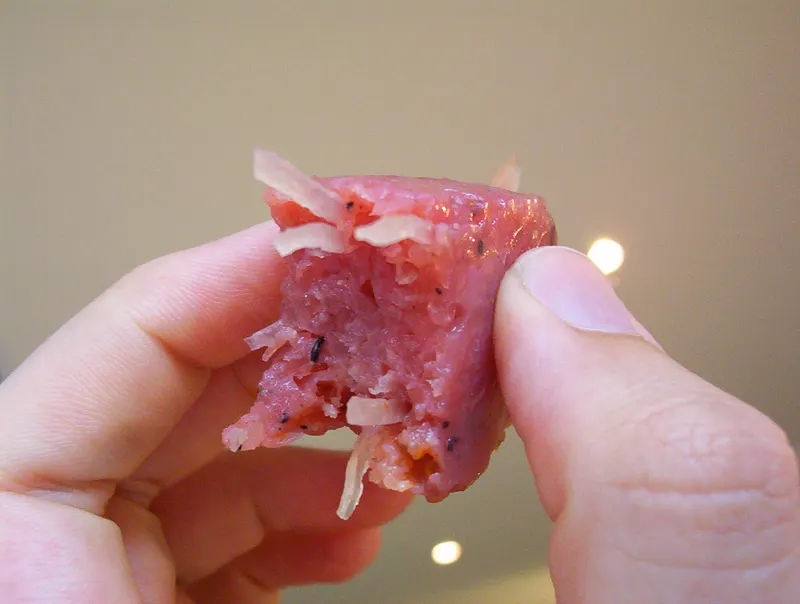
Raw lean pork is ground fine, mixed with strips of boiled pork rind, roasted rice powder, sugar, salt, garlic and spices, then shaped into small rolls wrapped in guava or star gooseberry leaves and banana leaf. The rolls sour at room temperature for two to four days and are eaten raw.
Amounts from a sourceThe shares of pork and rind are those quoted in the introduction of a study of fermented foods from central Vietnam (Phan et al. 2017), which takes them from an earlier study; they are not measurements from that study's own samples. The sources used here give no amounts for the rice powder, sugar, salt or spices.
Total time across the recorded steps: 2 days – 4 days
Start
Drag the bar or press Play
What changes:Pork rind is boiled and sliced into thin strings
Step 1 of 5
Boil the pork rind and slice it into strings
Time
Not documented
Temperature
Not documented
Salt
None given
Acidity
Not documented
Which microbes the steps name, step by step
L. plantarum
C. farciminis
Leuconostoc citreum
Pediococcus pentosaceus
Output: boiled rind strings.
Flavour
Not documented
Texture
Not documented
Colour
Not documented
Microbes at work in this step
Not documented for this step.
Method
Measured measured in a studySet fixed by a specification or tested recipeReported one source reports itTypical a general value, not sourced for this fermentUnconfirmed not yet checked against a source
At a glance
Raw lean pork is ground fine, mixed with strips of boiled pork rind, roasted rice powder, sugar, salt, garlic and spices, then shaped into small rolls wrapped in guava or star gooseberry leaves and banana leaf. The rolls sour at room temperature for two to four days and are eaten raw. Made in 5 steps over 2 days – 4 days. The longest step, ferment at room temperature, takes 2–4 days (Phan Y.T.N 2017). Lactiplantibacillus plantarum and Companilactobacillus farciminis do most of the fermenting.
Nem chua is a small raw pork roll soured in leaf wrappers for only a few days, with boiled pork rind and roasted rice powder in the mix. It is not dried or smoked, unlike most European fermented sausages.
Tré (central Vietnam)Made with cooked pork, including ear and nose; less lactic acid and, on average, more acetic acid than nem chua in five Huế market samples each.
Safety
Nem chua is eaten without cooking after two to four days of souring at ambient temperature. A 2017 study of its lactic bacteria says the tight wrapping inhibits potential pathogens and, citing earlier work, gives a shelf life of five days at room temperature, but it tested neither pathogens nor keeping. Souring is not shown to make raw pork safe. The US CDC says curing, drying or smoking alone does not consistently kill Trichinella worms, and undercooked pork is among the meats it names. A 2013 post-outbreak study in Thanh Hoa province linked raw and undercooked dishes, nem chua among them, made from one hunted wild boar to trichinellosis and advised thorough cooking of meat. These steps describe a traditional product, not a tested home method.
Hazards the sources name: Trichinella (parasite) in meat from a hunted wild boar; a post-outbreak study linked raw lap and undercooked nem chua made from one boar to 30 seropositive cases in Muong Lat, Thanh Hoa.