Side-by-side or overlay PDF diff driven by one engine that reads each file into a structured model — text, vector geometry, images, form fields, annotations — and compares the models. Moves show as moves, edits show only where they happened, and any PDF type works without picking a mode.
Open a STEP / STP part and it measures itself — volume, thinnest wall, draft and undercut checks on load, plus hole detection with a BOM. Measure, section, export STL. Rust + WASM B-rep kernel, runs in your browser.
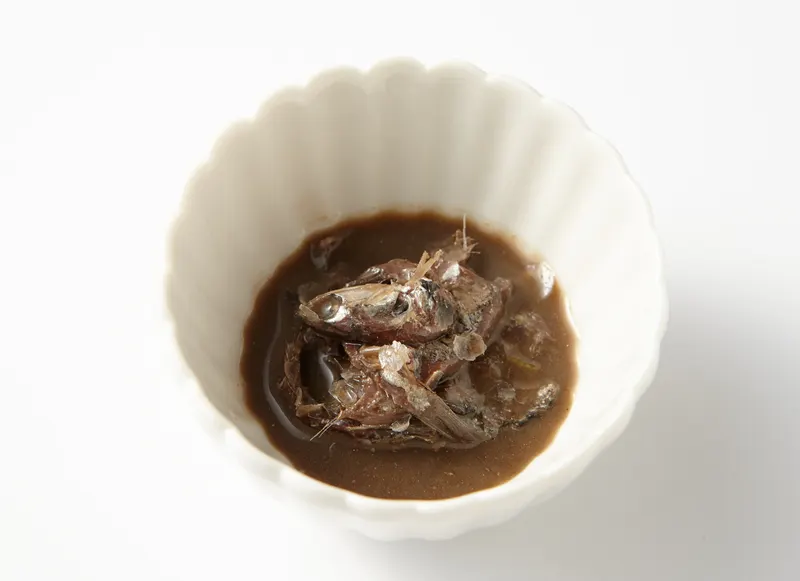
Whole anchovies are layered with salt in a jar, topped with a cap of salt and sealed. Over months the anchovies ferment into a salty, savoury jeotgal. Myeolchi-jeot is one of the most used jeotgal; it goes into kimchi and is also used with blanched seaweed.
Amounts from a sourceHome recipe by volume from the Encyclopedia of Korean Culture, about 10 parts anchovy to 6 parts salt. Studied commercial batches are salted at 20–25 % right after the catch.
Fresh anchovies10 doe (Korean volume measure)
Fish caught in May and June are the most mature and best for salting[encykorea]
Salt6 doe
Layered with the fish, plus a white layer of salt on top[encykorea]
Total time across the recorded steps: 2 years
Start
Drag the bar or press Play
What changes:Starting material: whole fresh anchovies from the spring catch
Step 1 of 5
Take spring anchovies
Time
Not documented
Temperature
Not documented
Salt
None given
Acidity
Not documented
Which microbes the steps name, step by step
T. halophilus
For a jeot to be eaten raw, the fish are cleaned and the bones taken out first. Output: whole fresh anchovies, caught in May and June.
Flavour
Not documented
Texture
Not documented
Colour
Not documented
Microbes at work in this step
Not documented for this step.
Method
Measured measured in a studySet fixed by a specification or tested recipeReported one source reports itTypical a general value, not sourced for this fermentUnconfirmed not yet checked against a source
At a glance
Whole anchovies are layered with salt in a jar, topped with a cap of salt and sealed. Over months the anchovies ferment into a salty, savoury jeotgal. Myeolchi-jeot is one of the most used jeotgal; it goes into kimchi and is also used with blanched seaweed. Made in 5 steps over 2 years. The longest step, ferment, takes up to 2 years (Lim J.Y 2024) and runs at 10 °C (Lim J.Y 2024). Salt is 20–25 % (Lim J.Y 2024). Tetragenococcus halophilus and Tetragenococcus muriaticus do most of the fermenting.
Myeolchi-jeot is the salted anchovy itself. Myeolchi aekjeot is the clear liquid sauce made from salted anchovy. In Chungcheong and Hwanghae, sand-lance (kkanari) jeot fills the same role.
Raw-eating myeolchi-jeotThe fish are cleaned and boned before salting, then taken out in autumn and seasoned.
Myeoljang (Geomundo)A sauce made from the solids and cloudy liquid left in spring-salted myeolchi-jeot once the clear liquid is taken off, used where soybeans are hard to grow.
Safety
The FDA notes that histamine can form while fish is salted and fermented until the product is shelf-stable. Its current criteria for histamine-forming fish are 35 ppm as a sign of decomposition and 200 ppm as the level where illness is possible, and it says heating does not remove histamine once formed. A Korean survey found histamine up to 1,741.99 mg/kg in the most-eaten fish ferments, though estimated daily intake stayed low; in that study stir-frying cut the amines. Codex limits fish sauce to 40 mg histamine per 100 g and requires at least 200 g/L salt; that standard covers the sauce, not this salted fish. Keep the salt high and the jar sealed.
Hazards the sources name: Histamine and tyramine, biogenic amines measured in market fermented fish products (the study measured the amines, not the bacteria that form them).
Anchovies began to be caught in large numbers in Korea in the late Joseon period. Salted anchovy is hard to find in old books, which suggests the jeot itself is fairly recent (Encyclopedia of Korean Culture).
Starter
The sources we found do not say how its fermentation begins.
[song2018] Song E.J., Lee E.S., Park S.L. et al. 2018, Bacterial community analysis in three types of the fermented seafood, jeotgal, produced in South Korea, Biosci. Biotechnol. Biochem. 82(8):1444–1454, doi:10.1080/09168451.2018.1469395 (abstract)paper
[lee2018] Lee Y., Cho Y., Kim E. et al. 2018, Identification of lactic acid bacteria in galchi- and myeolchi-jeotgal by 16S rRNA gene sequencing, MALDI-TOF mass spectrometry, and PCR-DGGE, J. Microbiol. Biotechnol. 28(7):1112–1121, doi:10.4014/jmb.1803.03034 (abstract)paper
[guan2011] Guan L., Cho K.H., Lee J.H. 2011, Analysis of the cultivable bacterial community in jeotgal, a Korean salted and fermented seafood, and identification of its dominant bacteria, Food Microbiol. 28(1):101–113, doi:10.1016/j.fm.2010.09.001 (abstract)paper
[zhao2025] Zhao W. and Moon B. 2025, Monitoring and risk assessment of biogenic amines in fermented fish products in Korea, J. Food Compos. Anal. 146 (abstract)paper