Side-by-side or overlay PDF diff driven by one engine that reads each file into a structured model — text, vector geometry, images, form fields, annotations — and compares the models. Moves show as moves, edits show only where they happened, and any PDF type works without picking a mode.
Open a STEP / STP part and it measures itself — volume, thinnest wall, draft and undercut checks on load, plus hole detection with a BOM. Measure, section, export STL. Rust + WASM B-rep kernel, runs in your browser.
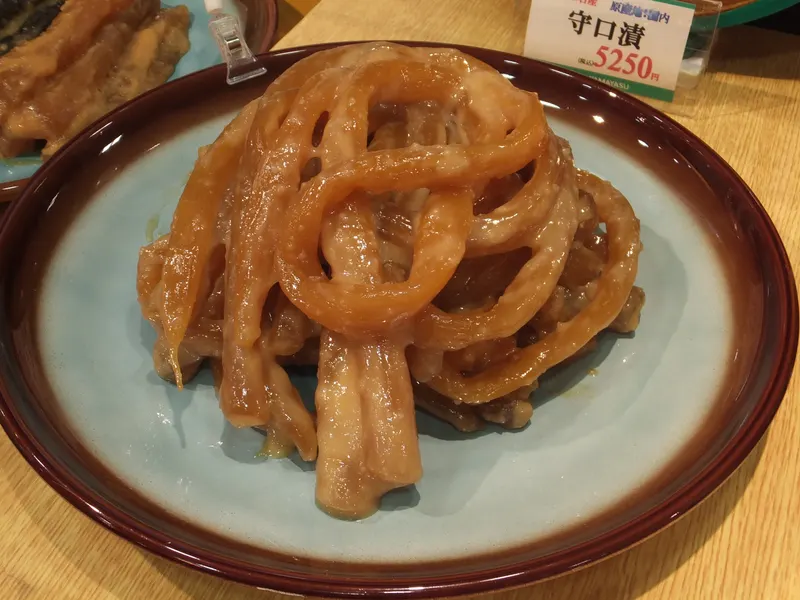
The very long, thin Moriguchi daikon is salted twice, first lightly to draw out water and then strongly so it keeps, and then buried in sake lees again and again, which lowers its salt and gives it the lees' flavour. It is finished in mirin lees and sugar, and the whole process takes two years or more, ending in an amber, sweet, crisp coil.
What changes:The long daikon are packed in light salt, which draws out water and harshness
Step 1 of 4
Salt lightly at harvest
Time
Harvested in December and January, then salted at a low salt concentration
Reported
Temperature
Not documented
Salt
None given
Acidity
Not documented
The light salt draws out water and harsh taste. Output: wilted, dehydrated daikon.
Flavour
Not documented
Texture
Not documented
Colour
Not documented
Microbes at work in this step
Not documented for this step.
Method
Measured measured in a studySet fixed by a specification or tested recipeReported one source reports itTypical a general value, not sourced for this fermentUnconfirmed not yet checked against a source
At a glance
The very long, thin Moriguchi daikon is salted twice, first lightly to draw out water and then strongly so it keeps, and then buried in sake lees again and again, which lowers its salt and gives it the lees' flavour. It is finished in mirin lees and sugar, and the whole process takes two years or more, ending in an amber, sweet, crisp coil. Made in 4 steps over 2 years. The longest step, finish in mirin lees and sugar, takes at least 2 years (MAFF にっぽん伝統食図鑑 (Japanese Traditional Foods) 2026). Salt is 9.2 % (Suzuki Masahiro 2022). Fructilactobacillus fructivorans, the lactic acid bacterium that dominated the lees and finished pickle in a related sake-lees pickle, narazuke does most of the fermenting.
Moriguchi-zuke is a Nara-zuke style lees pickle, but it uses mirin lees as well as sake lees, which is why it is amber and sweeter. The daikon is salted twice before the lees, and the root is very long and thin, about 1.2–1.3 m by 2 cm.
Ao-uri mirin-kasu-zukeThe same method used on green melon by the shop that invented Moriguchi-zuke.
Safety
MAFF says the strong salting lets the daikon keep for a long time, and the changes of lees then lower its salt. The spent lees held 9.2 % salt equivalent and 2.3 % alcohol, and an Aichi study found no coliforms in them after 1, 4 and 10 months of sealed storage at room temperature (Suzuki and Kurita 2017). That study tested waste lees for pig feed, not the pickle, so it gives no safety figure for what people eat.
The method was devised in the Meiji era by Yamada Saikichi, a Nagoya businessman and cook, who sold it as Moriguchi daikon in mirin from 1882. Being chosen as a souvenir of the 1950 National Sports Festival in Aichi spread it across Japan (MAFF). It was also sold at Sasashima station, later Nagoya station (Japanese Wikipedia).
Starter
The sources we found do not say how its fermentation begins.