Side-by-side or overlay PDF diff driven by one engine that reads each file into a structured model — text, vector geometry, images, form fields, annotations — and compares the models. Moves show as moves, edits show only where they happened, and any PDF type works without picking a mode.
Open a STEP / STP part and it measures itself — volume, thinnest wall, draft and undercut checks on load, plus hole detection with a BOM. Measure, section, export STL. Rust + WASM B-rep kernel, runs in your browser.
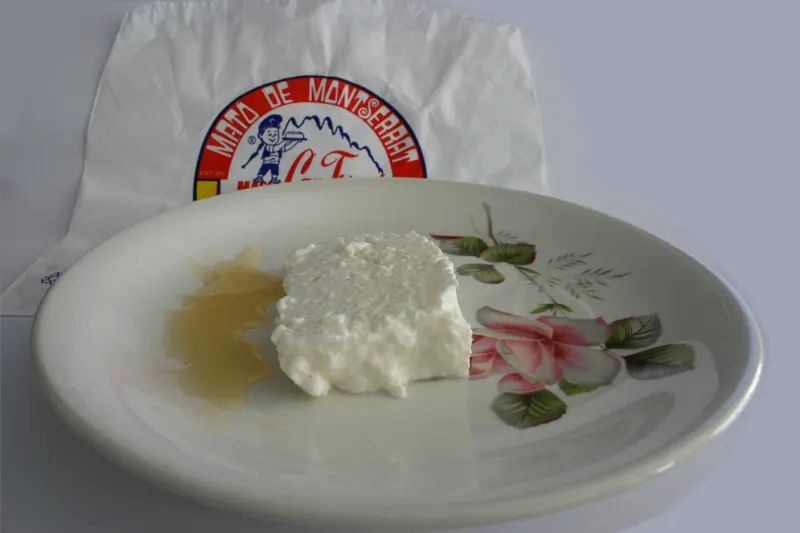
Mató is a boundary entry, a fresh curd set by heat and a coagulant, with no starter and no salt. Milk, now mostly cow but traditionally goat, is heated to pasteurise it, then set either with rennet at 34–45 °C or with calcium chloride at 78–82 °C, and drained by gravity. The soft, moist, unsalted curd keeps only days and is eaten as a dessert with honey.
No fixed amounts recordedEach maker has its own method; there is no fixed recipe. Ranges follow a 2018 survey of Catalan makers.
Cow, goat or sheep milk
About 55% of makers use cow milk, 38% goat and 7% sheep[aboab2018]
Rennet (animal or vegetable) and/or calcium chloride
One sheep-milk maker still makes herbacol, a cardoon (Cynara cardunculus) rennet; acid such as lemon juice or vinegar was the old alternative[aboab2018]
Total time across the recorded steps: 15 min – 25 h
Start
Drag the bar or press Play
What changes:The milk is heated hot enough to pasteurise it
Step 1 of 4
Heat the milk
Time
Not documented
Temperature
72–90 °C
Reported
Salt
None given
Acidity
Not documented
Heating draws whey proteins into the curd, which sets Mató apart from other fresh cheeses.
Flavour
Not documented
Texture
Not documented
Colour
Not documented
Microbes at work in this step
Not documented for this step.
Method
Measured measured in a studySet fixed by a specification or tested recipeReported one source reports itTypical a general value, not sourced for this fermentUnconfirmed not yet checked against a source
At a glance
Mató is a boundary entry, a fresh curd set by heat and a coagulant, with no starter and no salt. Milk, now mostly cow but traditionally goat, is heated to pasteurise it, then set either with rennet at 34–45 °C or with calcium chloride at 78–82 °C, and drained by gravity. The soft, moist, unsalted curd keeps only days and is eaten as a dessert with honey. Made in 4 steps over 15 min – 25 h. The longest step, drain by gravity, takes 10 min – 24 h (Aboab M. 2018).
Unlike most fresh cheeses, Mató gets no starter and no salt, and its milk is heated hard first, so more whey protein stays in the curd. That leaves it moister and softer than ordinary fresh cheese and gives it only a few days of life.
Boundary
A fresh curd set by heat with rennet or calcium chloride; no starter, not fermented
Mató de MontserratSold by farm women of Marganell at the Montserrat market since the late 19th century
Rennet matóSet at 34–45 °C; gel-like
Calcium chloride matóSet at 78–82 °C; grainy
Mató with herbacolSet with homemade cardoon rennet, as in the past; now rare
Safety
Mató is a moist fresh product with no salt and no acid from a starter. Makers keep it at 0–9 °C and give it a shelf life of 2–10 days, longer only after high-pressure treatment.
The medieval Catalan cookbook Llibre de Sent Soví serves mató with honey, as does a 16th-century Christmas song, El Noi de la Mare. It was first made from goat milk, set with herbacol or acid, for city markets and for home. Records place mató de Montserrat at the Montserrat market from the late 19th century. A 2018 thesis lists 96 Catalan dairies that make it, and the makers' association was preparing a PGI application.