Side-by-side or overlay PDF diff driven by one engine that reads each file into a structured model — text, vector geometry, images, form fields, annotations — and compares the models. Moves show as moves, edits show only where they happened, and any PDF type works without picking a mode.
Open a STEP / STP part and it measures itself — volume, thinnest wall, draft and undercut checks on load, plus hole detection with a BOM. Measure, section, export STL. Rust + WASM B-rep kernel, runs in your browser.
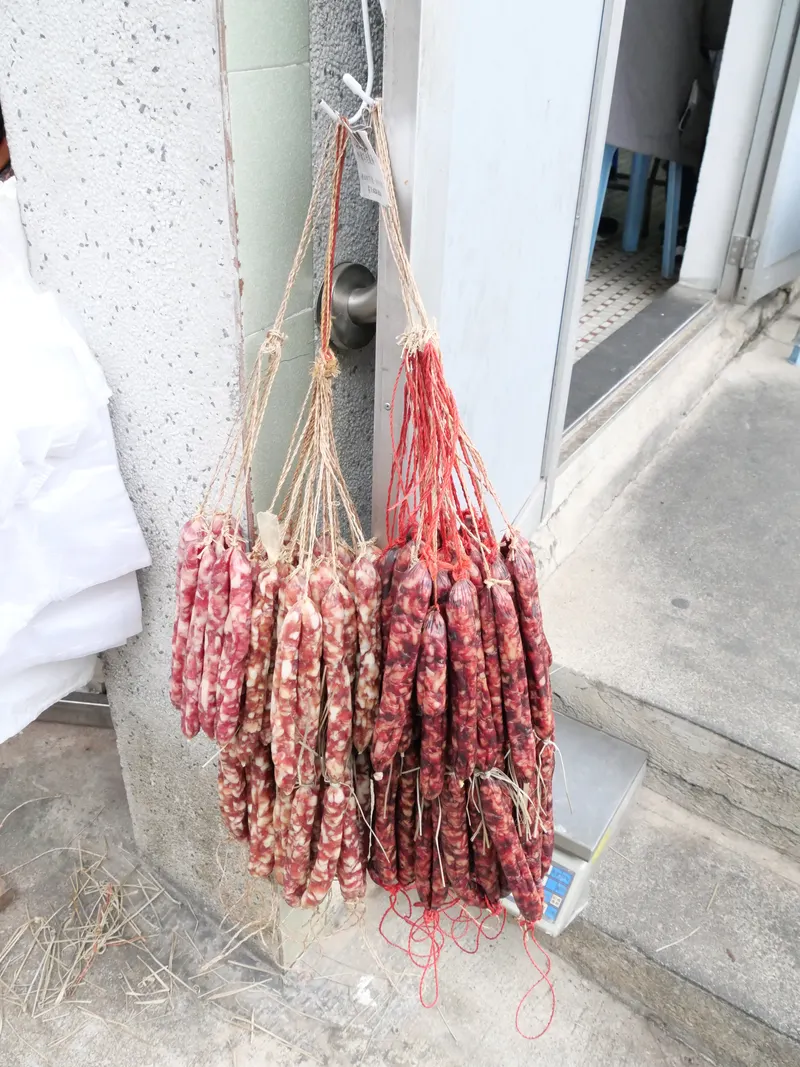
Boundary entry, mainly cured and dried. Strips of lean pork and fat are mixed with sugar, salt, soy sauce and Chinese liquor, stuffed into pig casing and dried in air for 4–7 days or in ovens at about 50 °C. Microbes take part in its ripening, but no starter is added and it is cooked before eating.
none (spontaneous ripening flora; no starter is added)
Total time across the recorded steps: 4 days – 7 days
Start
Drag the bar or press Play
What changes:Lean pork and fat are cut into strips
Step 1 of 5
Cut pork and fat into strips
Time
Not documented
Temperature
Not documented
Salt
None given
Acidity
Not documented
Output: lean and fat strips.
Flavour
Not documented
Texture
Not documented
Colour
Not documented
Microbes at work in this step
Not documented for this step.
Method
Measured measured in a studySet fixed by a specification or tested recipeReported one source reports itTypical a general value, not sourced for this fermentUnconfirmed not yet checked against a source
At a glance
Boundary entry, mainly cured and dried. Strips of lean pork and fat are mixed with sugar, salt, soy sauce and Chinese liquor, stuffed into pig casing and dried in air for 4–7 days or in ovens at about 50 °C. Microbes take part in its ripening, but no starter is added and it is cooked before eating. Made in 5 steps over 4 days – 7 days. The longest step, dry in air or ovens, takes 4–7 days (Mao J. et al. 2024) and runs at 50 °C (Chen X. et al. 2024). Staphylococci and micrococci does most of the fermenting.
Lap cheong gets its sweetness and alcoholic aroma from about 10 % sugar and Chinese liquor, and Cantonese makers dry it fast in warm ovens, while Sichuan sausage is spiced with chilli and Sichuan pepper and air-dried at room temperature.
Sichuan la changChilli and Sichuan pepper; air-dried at room temperature.
Five-spice sausageSeasoned with five-spice powder, ginger, soy sauce and cooking wine in one producer's recipe (Cai 2025).
Taiwanese xiangchangRarely dried the way Cantonese sausage is, and may use more sugar, giving a sweeter taste (Wikipedia).
Safety
A 2024 review says traditional Cantonese sausages, made without added starter cultures, are highly susceptible to the growth of harmful microorganisms, and that inoculated starter cultures can inhibit pathogens and the formation of harmful compounds such as biogenic amines. The sausages in the studies were steamed or boiled before tasting.
Wikipedia says Chinese sausage is believed to date from the Wei, Jin and Northern and Southern Dynasties or earlier, and that its earliest documented method is in the Qimin Yaoshu, an agricultural text of the Northern Wei period. A 2024 review calls Cantonese sausage a speciality of Guangdong, popular for its sweet taste.