Side-by-side or overlay PDF diff driven by one engine that reads each file into a structured model — text, vector geometry, images, form fields, annotations — and compares the models. Moves show as moves, edits show only where they happened, and any PDF type works without picking a mode.
Open a STEP / STP part and it measures itself — volume, thinnest wall, draft and undercut checks on load, plus hole detection with a BOM. Measure, section, export STL. Rust + WASM B-rep kernel, runs in your browser.
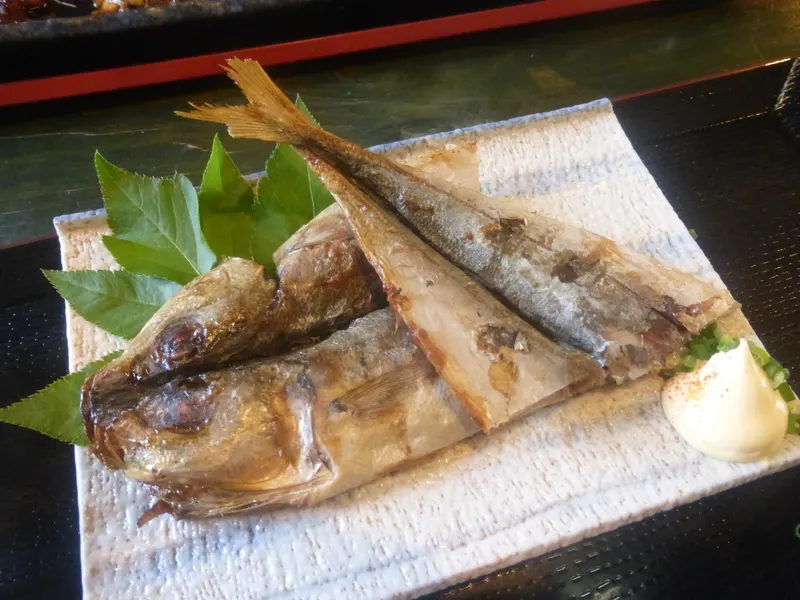
Split, gutted fish such as mackerel scad and flying fish are soaked for 10 to 20 hours in kusaya-jiru, a brown, smelly brine that has been reused and topped up for more than a century, then rinsed and dried in the sun. Bacteria living in the old brine give the fish its strong smell and help it keep about twice as long as ordinary salted dried fish.
backslop (the brine is reused with no added culture)
Total time across the recorded steps: 10 h – 20 h
Start
Drag the bar or press Play
What changes:The fish are split, gutted and washed until the blood is gone
Step 1 of 4
Split, gut, wash and bleed the fish
Time
Not documented
Temperature
Not documented
Salt
None given
Acidity
Not documented
Output: split, drained fish.
Flavour
Not documented
Texture
Not documented
Colour
Not documented
Microbes at work in this step
Not documented for this step.
Method
Measured measured in a studySet fixed by a specification or tested recipeReported one source reports itTypical a general value, not sourced for this fermentUnconfirmed not yet checked against a source
At a glance
Split, gutted fish such as mackerel scad and flying fish are soaked for 10 to 20 hours in kusaya-jiru, a brown, smelly brine that has been reused and topped up for more than a century, then rinsed and dried in the sun. Bacteria living in the old brine give the fish its strong smell and help it keep about twice as long as ordinary salted dried fish. Made in 4 steps over 10 h – 20 h. The longest step, soak in kusaya-jiru, takes 10–20 h (Fujii T. 1999). Salt is 2.7–11.1 % (Fujii T. 1999). "Corynebacterium" and Marinospirillum spiral bacteria do most of the fermenting.
Kusaya is made like ordinary salted dried fish, but the fish soak in an old, living brine instead of fresh salt water. The brine's bacteria give the smell and slow spoilage.
Hachijōjima kusayaSaltier brine (8.0–11.1 %) with a different microbial community and sulfur-rich smell.
Niijima kusayaLower-salt brine with no trimethylamine detected and short-chain fatty acid aromas.
Safety
E. coli, Vibrio parahaemolyticus and staphylococci were not found in kusaya brine, and kusaya keeps nearly twice as long as salted dried fish made from the same fish. Streptomyces from the brine make compounds active against moulds, yeasts and bacteria. Japanese Wikipedia, relaying a 1995 study, adds that the brine has few histamine-forming bacteria and holds histamine-degrading ones. Spoilage bacteria were not detected in recent metagenomic analyses of the gravy (Masaki et al. 2026, citing earlier work). Those findings concern the makers' own long-kept gravy. This page's sources put brine salt as low as 2.7 % on some islands and the pH at neutral, and none tests a brine started at home, so they do not show that any other brine is safe.
Kusaya is said to have started in the Izu Islands, probably on Niijima, in the Edo period, when islanders paid their taxes in salt and used salt sparingly, so the curing brine was reused and topped up. Hachijōjima's makers say they began with brine given by Niijima. How old the brines are is stated differently, Masaki et al. (2026) say reused for over a century, Fujii et al. (2016) for several hundred years.