Side-by-side or overlay PDF diff driven by one engine that reads each file into a structured model — text, vector geometry, images, form fields, annotations — and compares the models. Moves show as moves, edits show only where they happened, and any PDF type works without picking a mode.
Open a STEP / STP part and it measures itself — volume, thinnest wall, draft and undercut checks on load, plus hole detection with a BOM. Measure, section, export STL. Rust + WASM B-rep kernel, runs in your browser.
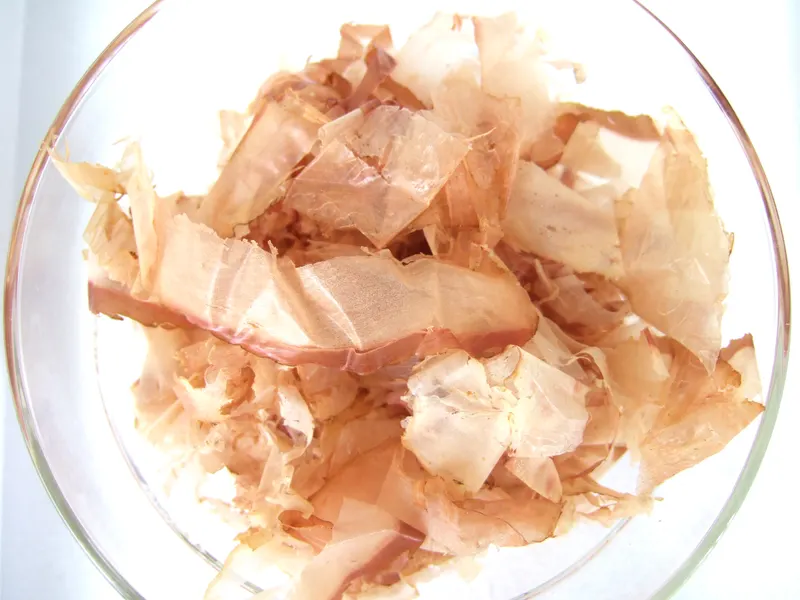
Skipjack fillets are simmered, deboned and smoked again and again until their moisture falls to 26 % or less, which gives arabushi. For karebushi, the fillets are scraped and covered with Aspergillus mould, sun-dried and brushed clean, about four times over six months. The moulds break down fat and leave a mellower flavour and colour.
Aspergillus moulds sprayed onto the arabushi surface
Total time across the recorded steps: 6.3 months
Start
Drag the bar or press Play
What changes:The skipjack is headed, gutted and cut into four loins
Step 1 of 6
Head, gut and cut into loins
Time
Not documented
Temperature
Not documented
Salt
None given
Acidity
Not documented
Which microbes the steps name, step by step
Aspergillus
Output: four loin pieces per fish.
Flavour
Not documented
Texture
Not documented
Colour
Not documented
Microbes at work in this step
Not documented for this step.
Method
Measured measured in a studySet fixed by a specification or tested recipeReported one source reports itTypical a general value, not sourced for this fermentUnconfirmed not yet checked against a source
At a glance
Skipjack fillets are simmered, deboned and smoked again and again until their moisture falls to 26 % or less, which gives arabushi. For karebushi, the fillets are scraped and covered with Aspergillus mould, sun-dried and brushed clean, about four times over six months. The moulds break down fat and leave a mellower flavour and colour. Made in 6 steps over 6.3 months. The longest step, grow mould, sun-dry and brush off, about four times, takes 6 months (Takenaka S) and runs at 27 °C (Takenaka S). Aspergillus chevalieri and Aspergillus pseudoglaucus, A. amstelodami, A. ruber and A. montevidensis do most of the fermenting.
Katsuobushi is cooked and smoked before it is fermented, and the ferment is a dry surface mould, not a brine. Arabushi stops after smoking; only karebushi and honkarebushi are moulded.
HonkarebushiMoulded several times; the highest grade.
Safety
Repeated smoking over wood leaves polycyclic aromatic hydrocarbons. Because Japanese data showed lower levels were not achievable with good smoking practice, the EU set katsuobushi limits of 5.0 μg/kg benzo(a)pyrene and 30.0 μg/kg for the sum of four PAHs. Low water activity (0.62 in karebushi) keeps it shelf-stable.
MAFF says bonito dried or boiled to keep is recorded in the Taiho Code (701) and Engishiki (905). The modern method is said to have begun in Kii Province in 1674, and to have reached Makurazaki through Mori Yahei in 1707.