Side-by-side or overlay PDF diff driven by one engine that reads each file into a structured model — text, vector geometry, images, form fields, annotations — and compares the models. Moves show as moves, edits show only where they happened, and any PDF type works without picking a mode.
Open a STEP / STP part and it measures itself — volume, thinnest wall, draft and undercut checks on load, plus hole detection with a BOM. Measure, section, export STL. Rust + WASM B-rep kernel, runs in your browser.
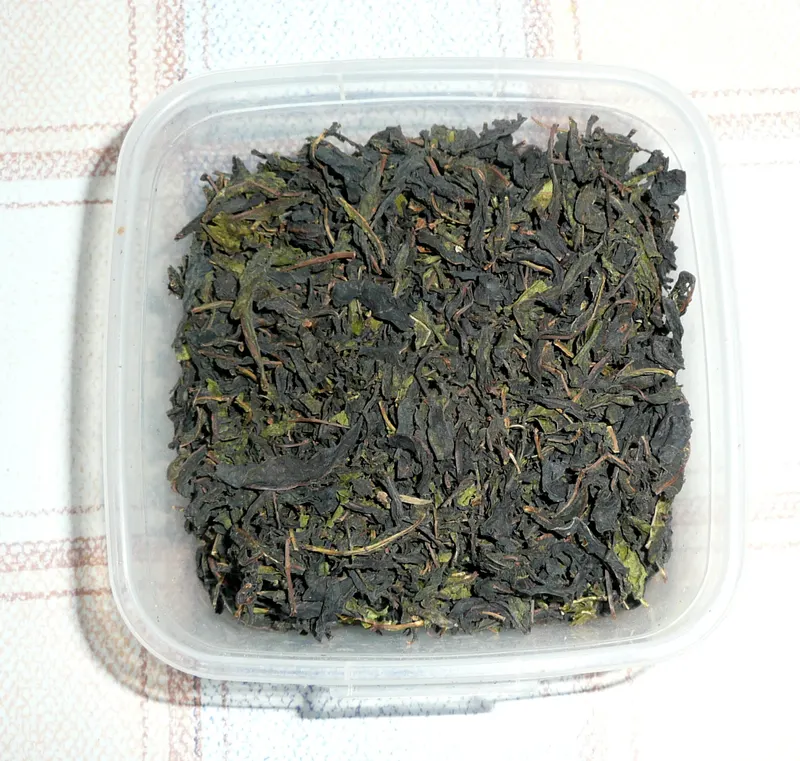
Fireweed leaves picked at flowering are cut or crushed, packed tight in jars and left warm for one to three days (the studies' conditions), then dried into a tea that modern makers sell as caffeine-free. It is a boundary entry, since the papers credit both the leaf's own enzymes and microorganisms for the "fermentation" and measured neither.
No fixed amounts recordedThe 2023 study fermented 0.300 kg of cut leaf for each of three replications; the 2020 study divided its leaf into 0.600 kg lots.
Fresh fireweed leaves
Collected in July at the beginning of mass flowering[lasinskas2020]
Nothing else
The 2023 study says no additional water is used in solid-phase fermentation[lasinskas2023]
Total time across the recorded steps: 34 h – 3.4 days
Start
Drag the bar or press Play
What changes:Starting material: fireweed leaves picked when the plants start to flower
Step 1 of 4
Pick leaves at the start of mass flowering
Time
Not documented
Temperature
Not documented
Salt
None given
Acidity
Not documented
Which microbes the steps name, step by step
Lactic acid bacteria
Yeasts
Output: fresh leaves.
Flavour
Not documented
Texture
Not documented
Colour
green
Microbes at work in this step
Not documented for this step.
Method
Measured measured in a studySet fixed by a specification or tested recipeReported one source reports itTypical a general value, not sourced for this fermentUnconfirmed not yet checked against a source
At a glance
Fireweed leaves picked at flowering are cut or crushed, packed tight in jars and left warm for one to three days (the studies' conditions), then dried into a tea that modern makers sell as caffeine-free. It is a boundary entry, since the papers credit both the leaf's own enzymes and microorganisms for the "fermentation" and measured neither. Made in 4 steps over 34 h – 3.4 days. The longest step, pack tight and leave to ferment, takes 24 h – 3 days (Lasinskas M 2023) and runs at 29.5–30.5 °C (Lasinskas M 2023). Eurotium cristatum INA 01267, a fungus from Fujian dark tea, added to sterilised fireweed tea for 14 days at 28 °C in a Russian lab study of an inoculated variant does most of the fermenting.
Koporye tea began as a copy of Chinese tea making on a different plant. The papers credit its "fermentation" to both enzymes and microorganisms (lactic acid bacteria, yeast) and did not measure either, so it is unclear how much is a microbial ferment. Packing it tight in a closed jar for 72 h gave the highest oenothein B and flavonoids (Lasinskas 2023).
Eurotium-post-fermented fireweed tea (experimental)A Russian lab study took ready-made fermented fireweed tea, sterilised it by autoclave and inoculated it with Eurotium cristatum, as in Chinese fu brick tea. In lab culture the strain made none of the four mycotoxins tested (aflatoxin B1, patulin, deoxynivalenol and zearalenone), Efimenko 2021.
Aerobic Ivan-chaiFermented with an air-passing lid. Antioxidant activity rose by 5.64 to 17.63 % over unfermented leaf; the highest value in the study was in the closed-jar 72 h sample (Lasinskas 2023).
Safety
In the studies the dried leaf was stored in a dark, dry, cool, ventilated room (Lasinskas 2020).
Russian Wikipedia, whose history section carries a reliability warning, says a household servant of the landowner Savelov, who had lived at the Russian embassy in China, set up production of a cheap fireweed tea near the village of Koporye. It was widely sold as Chinese tea. A regulation of 6 June 1816 banned passing it off as Chinese tea, and an 1839 police statute for state peasants banned its use and gathering.
Starter
The sources we found do not say how its fermentation begins.