Side-by-side or overlay PDF diff driven by one engine that reads each file into a structured model — text, vector geometry, images, form fields, annotations — and compares the models. Moves show as moves, edits show only where they happened, and any PDF type works without picking a mode.
Open a STEP / STP part and it measures itself — volume, thinnest wall, draft and undercut checks on load, plus hole detection with a BOM. Measure, section, export STL. Rust + WASM B-rep kernel, runs in your browser.
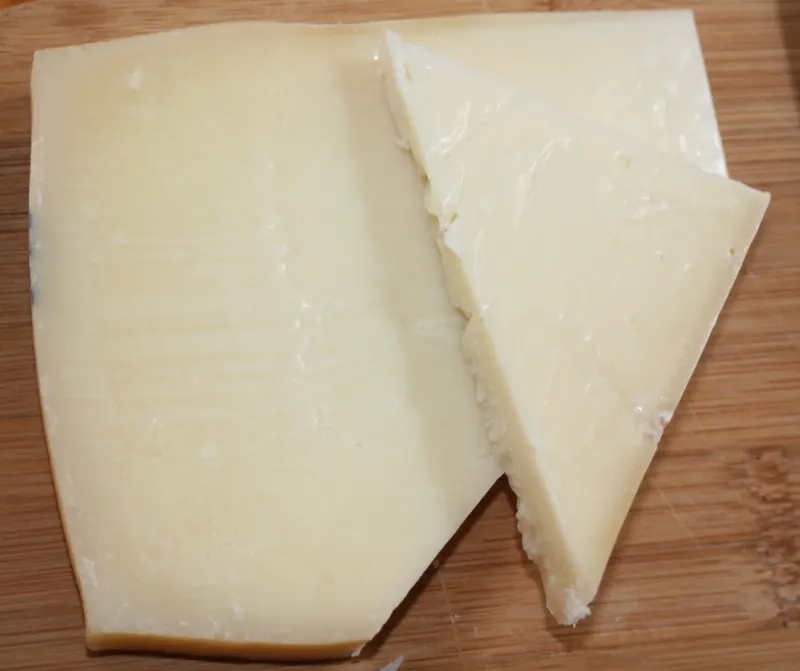
Kefalotyri is a hard, salty cheese of sheep or goat milk, or both, from Greece and Cyprus. A study of a semi-industrial make calls it a cooked hard cheese, and one artisanal make was ready to sell as a hard cheese at 90 days. Makes range from raw sheep milk with no starter to thermised milk with a native starter.
No fixed amounts recordedNo fixed recipe and no amounts in the readable sources. The 65 °C and 90-day values come from one semi-industrial make of thermised sheep milk (Bosnea et al. 2025, abstract) and one artisanal raw-milk make (Pappa et al. 2021, abstract).
Sheep or goat milk, or a mixture
Raw sheep milk in one artisanal mountain make; thermised (65 °C for 30 s) in one semi-industrial make[pappa2021][bosnea2025]
Starter culture
None in the artisanal raw-milk make; a native Streptococcus thermophilus and Lactococcus lactis starter in one semi-industrial make[pappa2021][bosnea2025]
Starter
none in an artisanal raw-milk make; a native Streptococcus thermophilus and Lactococcus lactis starter in one semi-industrial make
Total time across the recorded steps: 3 months
Start
Drag the bar or press Play
What changes:In one semi-industrial make the milk is thermised at 65 °C for 30 s first
Step 1 of 4
Thermise the milk
Time
0.5 min
Reported
Temperature
65 °C
Reported
Salt
None given
Acidity
Not documented
Which microbes the steps name, step by step
S. thermophilus
Lactococcus lactis
Lactic acid bacteria
Output: thermised sheep milk.
Flavour
Not documented
Texture
Not documented
Colour
Not documented
Microbes at work in this step
Not documented for this step.
Method
Measured measured in a studySet fixed by a specification or tested recipeReported one source reports itTypical a general value, not sourced for this fermentUnconfirmed not yet checked against a source
At a glance
Kefalotyri is a hard, salty cheese of sheep or goat milk, or both, from Greece and Cyprus. A study of a semi-industrial make calls it a cooked hard cheese, and one artisanal make was ready to sell as a hard cheese at 90 days. Makes range from raw sheep milk with no starter to thermised milk with a native starter. Made in 4 steps over 3 months. The longest step, ripen to a hard cheese, takes 3 months (Bosnea L 2025). Salt is 4.1 % (Pappa E.C 2021). Streptococcus thermophilus ST1 and Lactococcus lactis and Mesophilic lactic acid bacteria and cocci do most of the fermenting.
Kefalotyri is a cooked hard cheese that is not protected by a PDO. In market samples its mean salt is 3.1 %, against 2.1 % in Graviera, and Kefalograviera, a similar Greek cheese, is a PDO.
Milk
Sheep, goat or a mixture
Ripening before sale
90 days for an artisanal hard cheese in one study
Composition
Mean of 17 market cheeses — pH 5.3, moisture 36.8 %, salt 3.1 %, fat in dry matter 49.2 %
Composition of one artisanal make at 90 days
Moisture 40.4 %, fat 28.8 %, salt 4.1 %, protein 23.3 %
In one artisanal raw-milk make with no starter, a study reports high numbers of enterococci and Enterobacteriaceae, and the authors still judged the hygiene rather satisfactory. A semi-industrial make thermised the milk at 65 °C for 30 s, and its mature cheeses were reported safe; the abstract does not say which pathogens were tested. Kefalotyri is salted; the 90-day artisanal cheese held 4.1 % salt. ANSES names Listeria monocytogenes, Salmonella and enterohaemorrhagic E. coli as hazards of raw-milk cheeses and tells pregnant women, young children, people over 65 and people with weak immunity to avoid them, apart from cooked pressed kinds such as Gruyère or Comté. It does not name Kefalotyri, so do not assume this cooked hard cheese is in that exception.
Hazards the sources name: Enterobacteriaceae, in high numbers in the raw-milk make; the authors judged its hygiene rather satisfactory.