Side-by-side or overlay PDF diff driven by one engine that reads each file into a structured model — text, vector geometry, images, form fields, annotations — and compares the models. Moves show as moves, edits show only where they happened, and any PDF type works without picking a mode.
Open a STEP / STP part and it measures itself — volume, thinnest wall, draft and undercut checks on load, plus hole detection with a BOM. Measure, section, export STL. Rust + WASM B-rep kernel, runs in your browser.
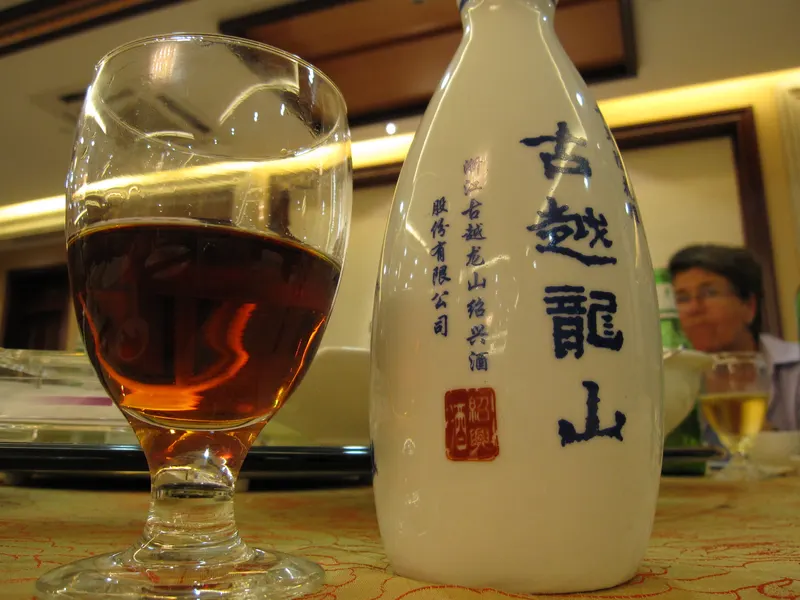
Jiafan is the semi-dry Shaoxing rice wine. It is brewed like the dry yuanhong, from soaked and steamed glutinous rice with wheat qu and a yeast mother in winter, but its mash may run a degree hotter and it keeps more sugar. It is also called huadiao.
No fixed amounts recordedTraditional process. The production rules say the water, rice and qu go in by the recipe standard but publish no ratios, so none are given here.
Carries the yeast; the rules define linfan jiumu and a pure-culture yeast mother[sx-spec]
Starter
koji/qu/mold-starter (wheat qu plus a yeast mother, either linfan jiumu made with jiuyao or a pure-culture one)
Total time across the recorded steps: 2.7 months – 3.2 months
Start
Drag the bar or press Play
What changes:The rice soaks under water for days to weeks
Step 1 of 8
Soak the glutinous rice
Time
3–18 days
Reported
Temperature
Not documented
Salt
None given
Acidity
Not documented
Which microbes the steps name, step by step
Yeasts
Saccharomyces cerevisiae
Aspergillus
Rhizopus
Mucor
Output: soaked rice.
Flavour
Not documented
Texture
grains swell and soften
Colour
Not documented
Microbes at work in this step
Not documented for this step.
Method
Measured measured in a studySet fixed by a specification or tested recipeReported one source reports itTypical a general value, not sourced for this fermentUnconfirmed not yet checked against a source
At a glance
Jiafan is the semi-dry Shaoxing rice wine. It is brewed like the dry yuanhong, from soaked and steamed glutinous rice with wheat qu and a yeast mother in winter, but its mash may run a degree hotter and it keeps more sugar. It is also called huadiao. Made in 8 steps over 2.7 months – 3.2 months. The longest step, slow ferment in clay jars, takes at least 2.6 months (Zhejiang Liquor Industry Association (drafted…) and runs at up to 20 °C (Zhejiang Liquor Industry Association (drafted…). Saccharomyces cerevisiae and Aspergillus do most of the fermenting.
Jiafan follows the yuanhong process but finishes semi-dry, with 15.1–40.0 g/L sugar against 15.0 g/L or less for yuanhong, and its traditional mash may reach 37 °C. The name means "added rice", and an outline source says more rice goes in; the production rules give no ratio.
Primary fermentation
Same as yuanhong, but the mash may reach 37 °C in the traditional method (33 °C automated)
Mash before pressing (semi-dry)
Before pressing, at least 14.5 % vol; sugar 15.0–30.0 g/L; total acid 4.0–8.0 g/L; amino nitrogen at least 0.65 g/L
HuadiaoJiafan aged in jars carved and painted with patterns.
Nü'er hongBy custom, jars buried when a daughter is born and opened at her wedding.
Safety
Ethyl carbamate and biogenic amines are the main potential hazards in huangjiu. Biogenic amines can be limited by careful process control. The explanatory note to the 2025 draft reports that samples brewed to its rules were tested for heavy metals, microbes and biogenic amines and met the national fermented-alcohol standard GB 2758.
Hazards the sources name: Pediococcus parvulus and Lactobacillus hilgardii (the review names them as histamine formers in rice wine in general).
Tian and colleagues (2022) say Shaoxing huangjiu appears to be the original huangjiu and was recorded in writings from the Spring and Autumn (770–476 BCE) and Warring States (475–221 BCE) periods. The Chinese mission to the EU (2021) puts Shaoxing wine at more than 2,500 years old, says Jianhu lake was enclosed in the Eastern Han dynasty, and says Shaoxing brewing was listed as national intangible cultural heritage in 2006. The 2025 group-standard draft defines jiafan as the semi-dry Shaoxing wine, and the 2024 core-area draft calls it jiafan (huadiao).