Side-by-side or overlay PDF diff driven by one engine that reads each file into a structured model — text, vector geometry, images, form fields, annotations — and compares the models. Moves show as moves, edits show only where they happened, and any PDF type works without picking a mode.
Open a STEP / STP part and it measures itself — volume, thinnest wall, draft and undercut checks on load, plus hole detection with a BOM. Measure, section, export STL. Rust + WASM B-rep kernel, runs in your browser.
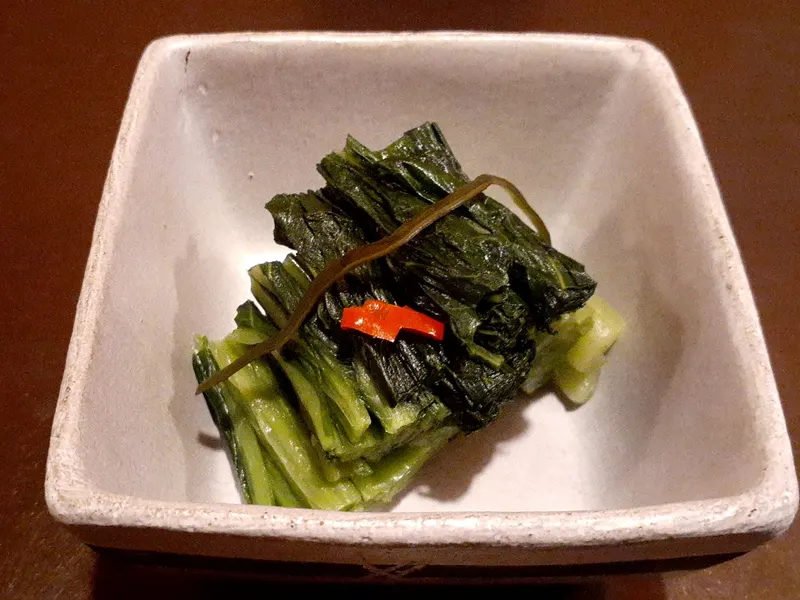
Hiroshimana is a flat-stemmed leafy Brassica sown in September and cut in winter, when frost sharpens its bite. It is sold two ways. The light pickle (asazuke) is salted for a few days and stays bright green and crisp, and the main pickle (honzuke) is kept in salt for about six months, finished with soy sauce and eaten as an old pickle (furuzuke).
No fixed amounts recordedMade by commercial picklers and farm co-ops with no published recipe amounts; the salt levels come from studies of commercial and lab pickles.
Hiroshimana, whole heads
Sown in September, well grown by December; frost sharpens the bite[maff-hiro]
What changes:Starting material: flat-stemmed Hiroshimana cut in winter, after frost sharpens its bite
Step 1 of 5
Grow and cut the greens after frost
Time
Not documented
Temperature
Not documented
Salt
None given
Acidity
Not documented
Which microbes the steps name, step by step
L. plantarum
P. ethanolidurans
Pediococcus parvulus
C. alimentarius
Lactic acid bacteria
Output: whole heads of Hiroshimana.
Flavour
Not documented
Texture
Not documented
Colour
Not documented
Microbes at work in this step
Not documented for this step.
Method
Measured measured in a studySet fixed by a specification or tested recipeReported one source reports itTypical a general value, not sourced for this fermentUnconfirmed not yet checked against a source
At a glance
Hiroshimana is a flat-stemmed leafy Brassica sown in September and cut in winter, when frost sharpens its bite. It is sold two ways. The light pickle (asazuke) is salted for a few days and stays bright green and crisp, and the main pickle (honzuke) is kept in salt for about six months, finished with soy sauce and eaten as an old pickle (furuzuke). Made in 5 steps over 6.1 months. The longest step, pickle for months (main pickle), takes 6 months (JA Hiroshima City). Salt is 2–8 % (Suenaga T 2025). Lactiplantibacillus plantarum, Pediococcus ethanolidurans, Pediococcus parvulus and Companilactobacillus alimentarius, isolated from the seasoning liquid of old Hiroshimana pickle does most of the fermenting.
Hiroshimana-zuke is sold both as a crisp, green light pickle eaten within weeks and as a six-month soured old pickle. Its flat, few-fibred stems make it soft enough to wrap rice balls.
Asazuke (light pickle)Salted a few days; crisp and bright green.
Honzuke / furuzuke (main pickle)About six months in salt, finished with soy sauce; sour, used in ochazuke.
Safety
A Hiroshima co-op sells the light pickle chilled, with a shelf life of about 2 weeks in the fridge. It sells the six-month pickle for cool, dark storage, with a shelf life of about 3 months.
One story says seeds came from Kyoto during the Edo period, so older people call it kyōna; a co-op account says a Kawauchi villager, Kihara Saiji, brought back a Kannonji Chinese cabbage from a Kyoto temple visit in Meiji 25 (1892) and crossed it with the older kyōna. It was named Hiroshimana in 1933. It spread with the oyster boats (kaki-bune) and became a gift pickle after the war.
Starter
The sources we found do not say how its fermentation begins.