Side-by-side or overlay PDF diff driven by one engine that reads each file into a structured model — text, vector geometry, images, form fields, annotations — and compares the models. Moves show as moves, edits show only where they happened, and any PDF type works without picking a mode.
Open a STEP / STP part and it measures itself — volume, thinnest wall, draft and undercut checks on load, plus hole detection with a BOM. Measure, section, export STL. Rust + WASM B-rep kernel, runs in your browser.
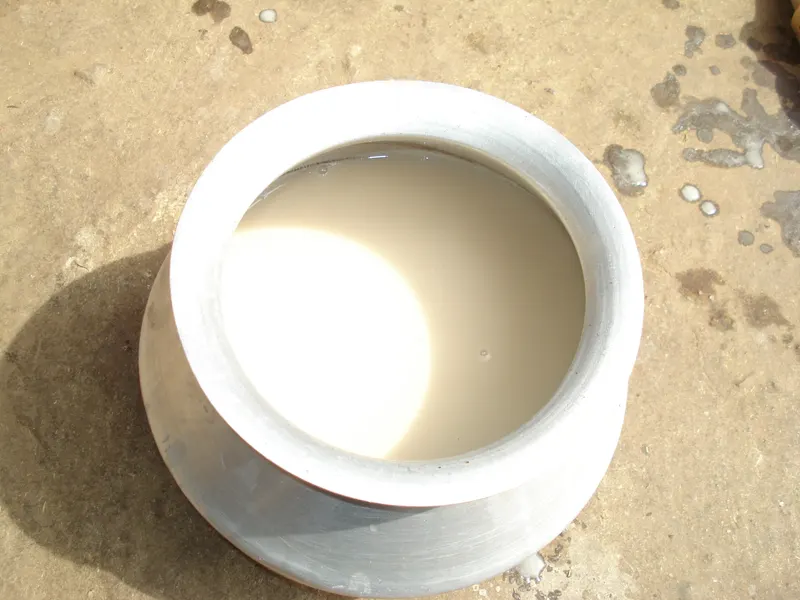
Handia is a mild rice beer of the tribal communities of eastern India. Boiled rice is dried on a mat, mixed with a herbal starter tablet (ranu or bakhar) and left untouched in a large earthen pot for 3 to 4 days, and the liquid is then sieved off. Lactic acid bacteria and yeasts dominate it, and the drink is low in alcohol, about 0.8–1.4 % in samples sold in Baripada, Odisha.
Amounts from a sourceHousehold proportions with no fixed batch size. The amounts are per 1 kg of rice, as recorded among the tribal makers of Baripada, Mayurbhanj, Odisha (Panda et al. 2014).
Rice1 kg
Mechanically de-husked, soaked and boiled in water, then dried on a bamboo mat. In West Bengal the rice is parboiled[panda2014][ghosh2021]
Ranu (bakhar) tablets, powdered8–10 tablets per kg of rice
Half plant parts and half rice powder; the roots, bark, flowers, fruit, shoots and leaves of about 20 plant species were recorded in Mayurbhanj. A West Bengal tablet is a ball of about 10 g dry weight made without any old ferment[panda2014][ghosh2021]
WaterAs required
Added to the rice and starter in the earthen pot; about 10 L of handia come from 1 kg of rice and 8–10 tablets[panda2014]
Starter
ranu (bakhar) tablets of plant parts and rice powder
Total time across the recorded steps: 10 days – 13 days
Start
Drag the bar or press Play
What changes:Plant powder and rice flour are shaped into tablets and left on straw to turn into starter
Step 1 of 7
Make and dry the ranu tablets
Time
5 days
Reported
Temperature
Not documented
Salt
None given
Acidity
Not documented
Which microbes the steps name, step by step
Moulds
Yeasts
Lactic acid bacteria
Powdered roots, bark and other plant parts are mixed with rice powder and water to a dough, rounded into tablets and spread over beds of straw with a final thin layer of straw on top. Output: dry ranu (bakhar) tablets.
Flavour
Not documented
Texture
Not documented
Colour
Not documented
Microbes at work in this step
Not documented for this step.
Method
Measured measured in a studySet fixed by a specification or tested recipeReported one source reports itTypical a general value, not sourced for this fermentUnconfirmed not yet checked against a source
At a glance
Handia is a mild rice beer of the tribal communities of eastern India. Boiled rice is dried on a mat, mixed with a herbal starter tablet (ranu or bakhar) and left untouched in a large earthen pot for 3 to 4 days, and the liquid is then sieved off. Lactic acid bacteria and yeasts dominate it, and the drink is low in alcohol, about 0.8–1.4 % in samples sold in Baripada, Odisha. Made in 7 steps over 10 days – 13 days. The longest step, make and dry the ranu tablets, takes 5 days (Panda S.K 2014). Moulds and yeasts, most numerous on day 2 of fermentation and Lactic acid bacteria and Bifidobacterium, rising through fermentation do most of the fermenting.
Ranu tablets are half plant parts and half rice powder, and the plants differ by place and season. The pot is left untouched until the liquid is sieved off, and the makers say the drink loses quality if it is diluted.
Haria (West Bengal)Parboiled rice is mixed with a bakhar tablet and kept in a heat-sterilised earthen pot for 3 to 5 days; the filtrate is cream-coloured and like buttermilk.
PachwaiName used in a 1942 review for the same rice or millet brew in Bengal, Bihar and Orissa; in Darjeeling it was made mostly from millet.
Handia of OdishaRecorded in 1942 under the names henda, paindan and sooram, brewed with a starter called bakkar rami.
Safety
In the Baripada samples no pathogenic bacteria were found on selective media, and the pH was 4.28–4.67 with a low alcohol content (Panda et al.). Lactic acid bacteria make acid, which creates conditions unfavourable for pathogens (Ghosh et al. 2021).
In 1942 Chopra and colleagues wrote that pachwai, handia or mama, a fermented liquor brewed from rice or millet, was drunk chiefly by the aboriginal tribes of Bengal as a stimulant and as a food. Home brewing was permitted only for private use, in a few districts, at the Bandhana and Paush Sankranti festivals. In Bihar it was the universal drink of aboriginal tribes such as the Santals and Bhils of the Chota Nagpur hills. The review adds that Santals, especially the women, object to pachwai bought from a shop.