Side-by-side or overlay PDF diff driven by one engine that reads each file into a structured model — text, vector geometry, images, form fields, annotations — and compares the models. Moves show as moves, edits show only where they happened, and any PDF type works without picking a mode.
Open a STEP / STP part and it measures itself — volume, thinnest wall, draft and undercut checks on load, plus hole detection with a BOM. Measure, section, export STL. Rust + WASM B-rep kernel, runs in your browser.
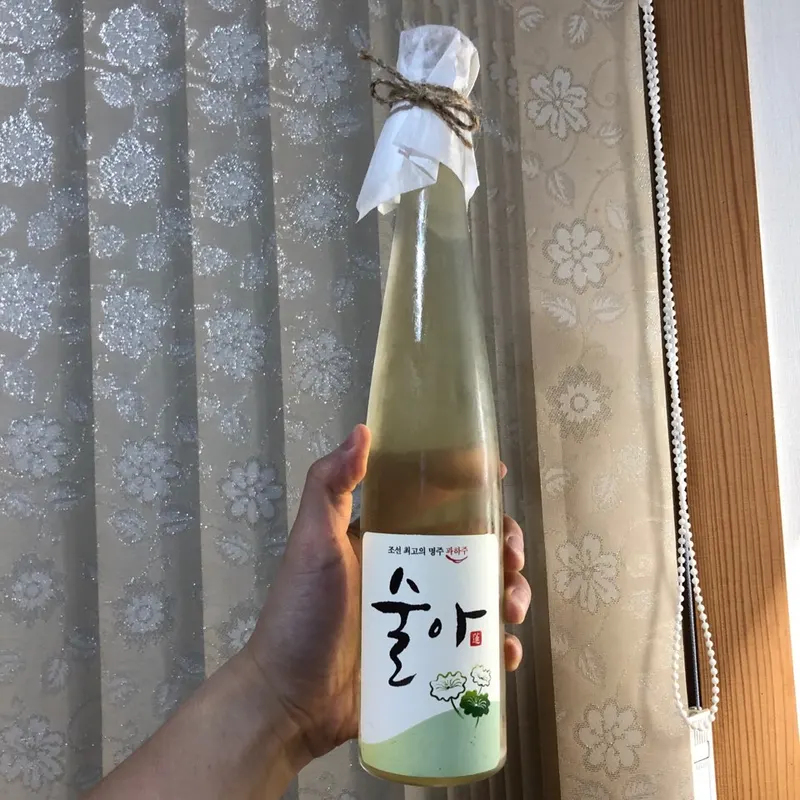
Gwaha-ju, "the wine that passes the summer", is a Korean rice wine made to keep through the hot season. Old recipes pour distilled soju into a fermenting yakju (clear rice wine), which raised the strength to about 18–23 % in a 2026 test, because plain yakju is low in alcohol and spoils easily. It is a honyangju, a drink that mixes brewing and distilling. Gimcheon makes its own gwaha-ju by a different method.
Amounts from a sourceTraditional recipe with no fixed batch. The amounts above are the Gyugon siuibang recipe as quoted by the Encyclopedia of Korean Culture, and the old books differ. A 2026 study based its soju-adding days on a historical analysis of 128 traditional liquor recipes.
Soaked overnight in a bottle of boiled, cooled water, then strained; the dregs are thrown away[ekc-gwahaju]
Good distilled soju14 bokja in the Gyugon siuibang
Added three days after the rice is mixed with the nuruk liquor (the Gyugon siuibang pours 14 bokja, the Gyuhap chongseo 20 bokja after 7 days); some versions use soju infused with herbs such as Lithospermum root (jicho)[ekc-gwahaju][choi2026]
Starter
koji/qu/mold-starter: nuruk
Total time across the recorded steps: 12 days – 19 days
Start
Drag the bar or press Play
What changes:Steamed rice, crumbled nuruk and water go into the crock
Step 1 of 4
Mix steamed rice, nuruk and water
Time
Not documented
Temperature
Not documented
Salt
None given
Acidity
Not documented
Which microbes the steps name, step by step
Moulds
Penicillium
Aspergillus
Mucor
Output: rice wine mash.
Flavour
Not documented
Texture
Not documented
Colour
Not documented
Microbes at work in this step
Not documented for this step.
Method
Measured measured in a studySet fixed by a specification or tested recipeReported one source reports itTypical a general value, not sourced for this fermentUnconfirmed not yet checked against a source
At a glance
Gwaha-ju, "the wine that passes the summer", is a Korean rice wine made to keep through the hot season. Old recipes pour distilled soju into a fermenting yakju (clear rice wine), which raised the strength to about 18–23 % in a 2026 test, because plain yakju is low in alcohol and spoils easily. It is a honyangju, a drink that mixes brewing and distilling. Gimcheon makes its own gwaha-ju by a different method. Made in 4 steps over 12 days – 19 days. The longest step, finish fermenting and mature, takes 12 days (Choi S.-W 2026). Moulds of the nuruk and Yeasts of the nuruk do most of the fermenting.
Gwaha-ju is yakju strengthened with distilled soju during fermentation, so it is both brewed and distilled. Plain yakju is only brewed; unsterilised yakju turned too sour to drink after about 23 days at 25 °C in one shelf-life study.
Old recipe-book gwaha-ju (famous in Seoul)Steamed glutinous rice is mixed into nuruk liquor and soju is poured in after 3 days (Gyugon siuibang) or 7 days (Gyuhap chongseo).
Gimcheon gwaha-juMade with water from the Gwaha spring and by a different method from the usual gwaha-ju. Steamed glutinous rice is kneaded with nuruk, a wine brewed beforehand serves as the starter (jumo), and the mash stays in a cool place for three months before it is drawn off. A provincial intangible heritage of North Gyeongsang since 13 May 1987.
Jicho-gwaha-juMade with soju infused with Lithospermum erythrorhizon root, which turns it red and adds polyphenols.
Safety
Soju is strong and yakju is low in alcohol and spoils easily, so the drink was devised to last the summer by adding the spirit (Encyclopedia of Korean Culture). Unsterilised plain yakju turned too sour to drink after about 23 days at 25 °C in one study.
Gwaha-ju has been famous in Seoul since the early Joseon period and is recorded in many old texts, such as the Jubangmun, Gyugon siuibang and Gyuhap chongseo. Wikipedia dates the earliest recorded recipe for the fortified drink to the 1670 cookbook Eumsik dimibang, and notes that an unfortified gwaha-baekju appears in the mid-15th-century Sanga yorok. Many recipes were lost during the Japanese occupation (1910–1945) and the Korean War. Gimcheon's gwaha-ju became a provincial intangible heritage on 13 May 1987.