Side-by-side or overlay PDF diff driven by one engine that reads each file into a structured model — text, vector geometry, images, form fields, annotations — and compares the models. Moves show as moves, edits show only where they happened, and any PDF type works without picking a mode.
Open a STEP / STP part and it measures itself — volume, thinnest wall, draft and undercut checks on load, plus hole detection with a BOM. Measure, section, export STL. Rust + WASM B-rep kernel, runs in your browser.
Alcoholic drinks from Goslar, then Leipzig and Halle, Germany
Gose (historical, Goslar and Leipzig)Gose
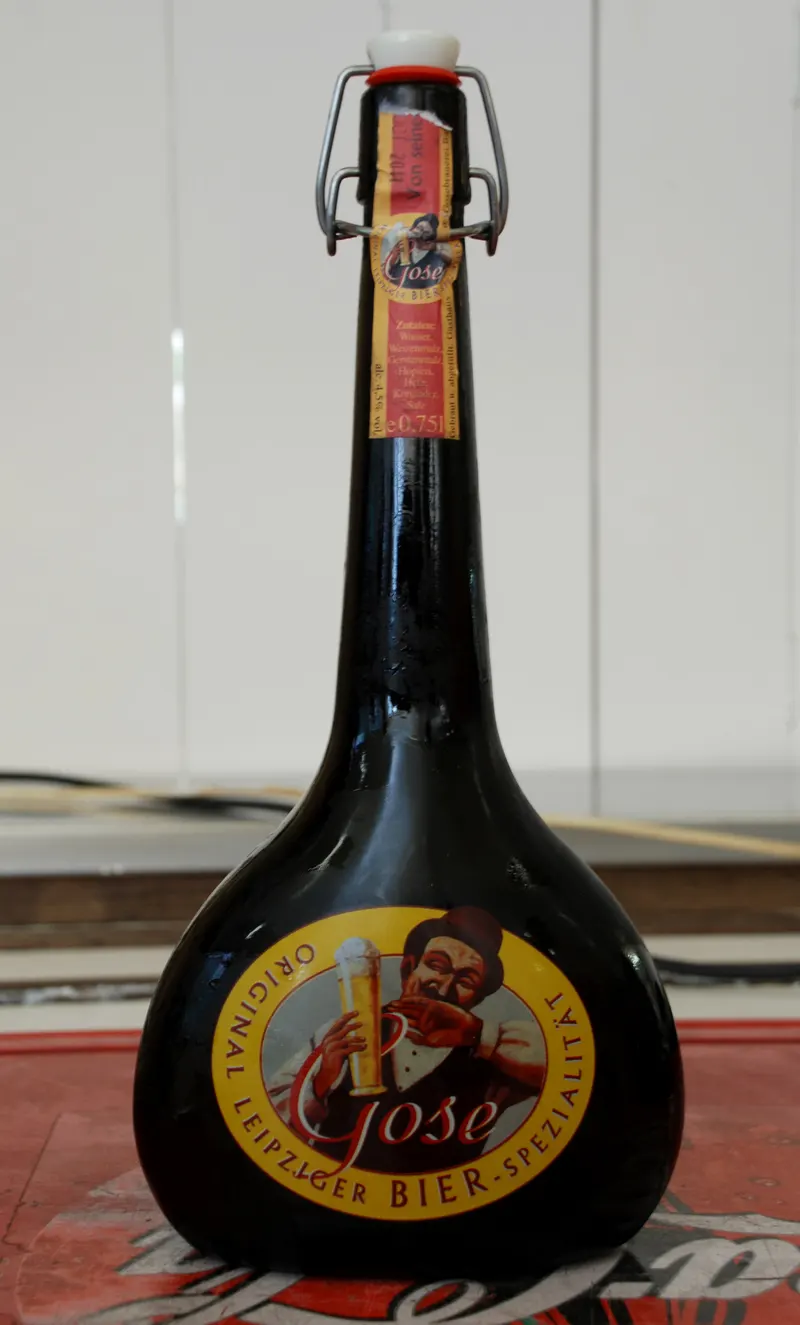
Historical gose was a top-fermented double wheat beer of wheat, barley and hops, named for Goslar and reaching Leipzig about 1730. In the 1870s it left the brewery still warm in casks dosed with yeast, was bottled in long-necked bottles plugged by its own rising yeast, and ripened in the tavern cellar until it turned pleasantly sour, which in winter took ten to twelve weeks.
No fixed amounts recordedA 19th-century brewery practice with no published recipe. Döllnitz brewed four times a week, 22–25 Viertel each time (a Viertel held about 210 bottles).
Wheat, barley and hops
The ingredients the brewers named; a rumoured powder added after a set boiling time was kept secret[gartenlaube1872]
Total time across the recorded steps: 2.3 months – 2.8 months
Start
Drag the bar or press Play
What changes:Wheat, barley and hops are brewed and boiled into wort
Step 1 of 5
Brew the wort from wheat, barley and hops
Time
Not documented
Temperature
Not documented
Salt
None given
Acidity
Not documented
Which microbes the steps name, step by step
Yeasts
It was said that a secret powder was stirred in after the wort had boiled for a set time [gartenlaube1872]. Output: boiled wort.
Flavour
Not documented
Texture
Not documented
Colour
Not documented
Microbes at work in this step
Not documented for this step.
Method
Measured measured in a studySet fixed by a specification or tested recipeReported one source reports itTypical a general value, not sourced for this fermentUnconfirmed not yet checked against a source
At a glance
Historical gose was a top-fermented double wheat beer of wheat, barley and hops, named for Goslar and reaching Leipzig about 1730. In the 1870s it left the brewery still warm in casks dosed with yeast, was bottled in long-necked bottles plugged by its own rising yeast, and ripened in the tavern cellar until it turned pleasantly sour, which in winter took ten to twelve weeks. Made in 5 steps over 2.3 months – 2.8 months. The longest step, ripen in the cellar until sour, takes 2.3–2.8 months (Hofmann F. 1872). Yeast (Hefe), added to each cask after filling; the 1872 article names no species does most of the fermenting.
Modern gose is brewed with salt and coriander and soured with Lactobacillus in the brewery [WP:Gose]. The 19th-century Leipzig gose was a wheat-barley-hop beer that left the brewery with added yeast and soured slowly in the bottle in the tavern cellar, so each tavern judged when it was ripe [gartenlaube1872].
Gludscher Gose (Glauditz)A gose brewed in the Dessau village of Glauditz that came to Leipzig about 1730 and was served at the Eutritzsch Gosenschenke [gartenlaube1872].
Döllnitzer GoseBrewed from the Napoleonic period at the manor of Döllnitz near Halle by brewer Ledermann, who rediscovered the method; the only gose brewery for Leipzig in 1872, supplying 21 taverns [gartenlaube1872].
BroyhanA sweet, strong wheat beer of Hannover; Knaust (1575) lists it next to gose [gartenlaube1855].
Safety
A single strong thunderstorm could turn all the gose in its path to vinegar, and the spoiled drink had to be poured away [gartenlaube1872].
Gose takes its name from the Gose stream at Goslar; Knaust's 1575 book describes it as sweet at first and later winey-sour, and towns such as Quedlinburg, Halberstadt and Wernigerode copied it [gartenlaube1855]. Gose reached Leipzig about 1730, and a jubilee of its introduction at Eutritzsch was planned in 1888 [gartenlaube1872, gartenlaube1888].
Temperature, salt and pH
The sources we found give no temperature, salt or pH figure for any of its steps.