Side-by-side or overlay PDF diff driven by one engine that reads each file into a structured model — text, vector geometry, images, form fields, annotations — and compares the models. Moves show as moves, edits show only where they happened, and any PDF type works without picking a mode.
Open a STEP / STP part and it measures itself — volume, thinnest wall, draft and undercut checks on load, plus hole detection with a BOM. Measure, section, export STL. Rust + WASM B-rep kernel, runs in your browser.
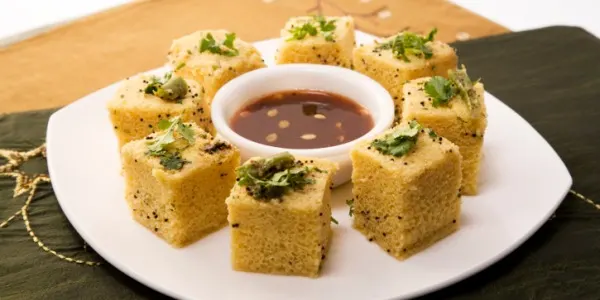
Split Bengal gram (chana dal) and rice are soaked, ground separately and mixed into a batter that ferments with no added starter. The risen batter is steamed open in a greased pan into a spongy, mildly sour cake, then tempered with mustard seed and cut.
Fermented spontaneously; FAO says the bacteria in idli batter come with the ingredients[sharma2018][fao1999]
Mustard or cumin seeds, green chillies and curry leaves
Sauteed and used to season the cut pieces[wp-dhokla]
Starter
spontaneous
Total time across the recorded steps: 36 h – 38 h
Start
Drag the bar or press Play
What changes:Water soaks into the dal and rice and softens them
Step 1 of 5
Soak the dal and the rice separately
Time
18–20 h
Reported
Temperature
16–23 °C
Reported
Salt
None given
Acidity
Not documented
Which microbes the steps name, step by step
L. mesenteroides
Streptococcus faecalis
Output: soft, swollen grains.
Flavour
Not documented
Texture
Not documented
Colour
Not documented
Microbes at work in this step
Not documented for this step.
Method
Measured measured in a studySet fixed by a specification or tested recipeReported one source reports itTypical a general value, not sourced for this fermentUnconfirmed not yet checked against a source
At a glance
Split Bengal gram (chana dal) and rice are soaked, ground separately and mixed into a batter that ferments with no added starter. The risen batter is steamed open in a greased pan into a spongy, mildly sour cake, then tempered with mustard seed and cut. Made in 5 steps over 36 h – 38 h. The longest step, soak the dal and the rice separately, takes 18–20 h (Sharma A 2018) and runs at 16–23 °C (Sharma A 2018). Salt is 0.8 % (Sharma A 2018). Leuconostoc mesenteroides and Enterococcus faecalis do most of the fermenting.
Dhokla is made like idli, but with Bengal gram (chana dal) in place of black gram, and the batter is steamed open in a greased pan instead of in a covered idli steamer.
KhamanChickpea flour (besan) only, no rice; lighter and softer.
Khatta, rasia, rava, moong dal, toor dal, green pea and sandwich dhoklaListed by Wikipedia as popular variants, with no description. Some variants replace the Bengal gram with pigeon peas or urad beans.
Safety
In the optimisation study, fermenting raised the biogenic amine content of the batter, and steaming for 20 min lowered it again, so the batter is always steamed before eating.
Wikipedia says dukkia, a pulse-based precursor of dhokla, is mentioned in a Jain text dated to 1066 CE, and that the earliest surviving work to mention the word dhokla is the Gujarati Varanaka Samuchaya (1520 CE).