Side-by-side or overlay PDF diff driven by one engine that reads each file into a structured model — text, vector geometry, images, form fields, annotations — and compares the models. Moves show as moves, edits show only where they happened, and any PDF type works without picking a mode.
Open a STEP / STP part and it measures itself — volume, thinnest wall, draft and undercut checks on load, plus hole detection with a BOM. Measure, section, export STL. Rust + WASM B-rep kernel, runs in your browser.
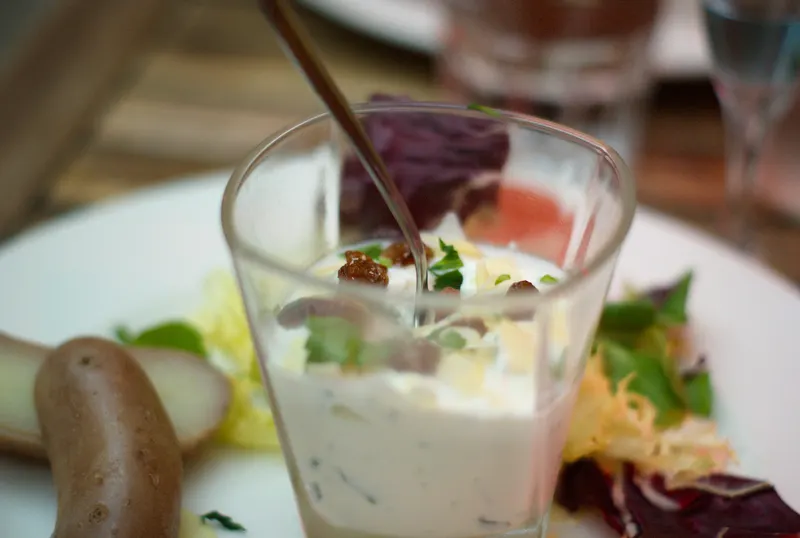
Cervelle de canut is a dressed fresh cheese, not a ripened one. The ferment is the fromage blanc, a fresh cheese that French law says is unripened and mainly lactic-fermented. The firm cheese is beaten with salt, pepper, a dash of vinegar, olive oil and fresh herbs.
What changes:Lactic fermentation starts to sour the milk
Step 1 of 4
Ferment the milk into fromage blanc
Time
Not documented
Temperature
Not documented
Salt
None given
Acidity
Not documented
Output: soured milk.
Flavour
Not documented
Texture
Not documented
Colour
Not documented
Microbes at work in this step
French law says fromage blanc, when fermented, undergoes mainly lactic fermentation
Method
Measured measured in a studySet fixed by a specification or tested recipeReported one source reports itTypical a general value, not sourced for this fermentUnconfirmed not yet checked against a source
At a glance
Cervelle de canut is a dressed fresh cheese, not a ripened one. The ferment is the fromage blanc, a fresh cheese that French law says is unripened and mainly lactic-fermented. The firm cheese is beaten with salt, pepper, a dash of vinegar, olive oil and fresh herbs.
Cervelle de canut is a fresh lactic cheese turned into a dish. The fermentation ends with the fromage blanc; what makes it cervelle de canut is the beating with vinegar, oil and herbs, which no plain fresh cheese gets.
Base
Fromage blanc, chosen firm; the Lyon library also names sarasson as another base
Ripening
None; French law makes fromage blanc an unripened cheese
ClaqueretAnother Lyon name for the same beaten, seasoned fresh cheese.
Safety
French Label Rouge rules for faisselle, a related fresh curd, keep the curd at 0–6 °C and limit E. coli to 10 per gram. Keep the dressed cheese cold and eat it fresh.
Hazards the sources name: Escherichia coli and Enterobacteriaceae, each limited to 10 per gram in Label Rouge faisselle.
The dish is linked to the canuts, the silk weavers of Lyon, who rose in revolt in 1831, 1834 and 1848. The Lyon library says the name recalls that they could not afford lamb's brains. It is also called claqueret, a name said to come from beating ("claquer") the cheese to work in the seasoning. The present recipe is credited to chef Paul Lacombe of the restaurant Léon de Lyon, who made it known in 1934. The Lyon library's answer says the weavers beat sarasson or fromage blanc with herbs, and that in 1841 this cheese, beaten with buttermilk, garlic and small onions, was eaten three times a day, though that rests on unnamed sources.
Starter
The sources we found do not say how its fermentation begins.
Process times
The sources we found give no figure for how long any of its steps take.
Temperature, salt and pH
The sources we found give no temperature, salt or pH figure for any of its steps.