Side-by-side or overlay PDF diff driven by one engine that reads each file into a structured model — text, vector geometry, images, form fields, annotations — and compares the models. Moves show as moves, edits show only where they happened, and any PDF type works without picking a mode.
Open a STEP / STP part and it measures itself — volume, thinnest wall, draft and undercut checks on load, plus hole detection with a BOM. Measure, section, export STL. Rust + WASM B-rep kernel, runs in your browser.
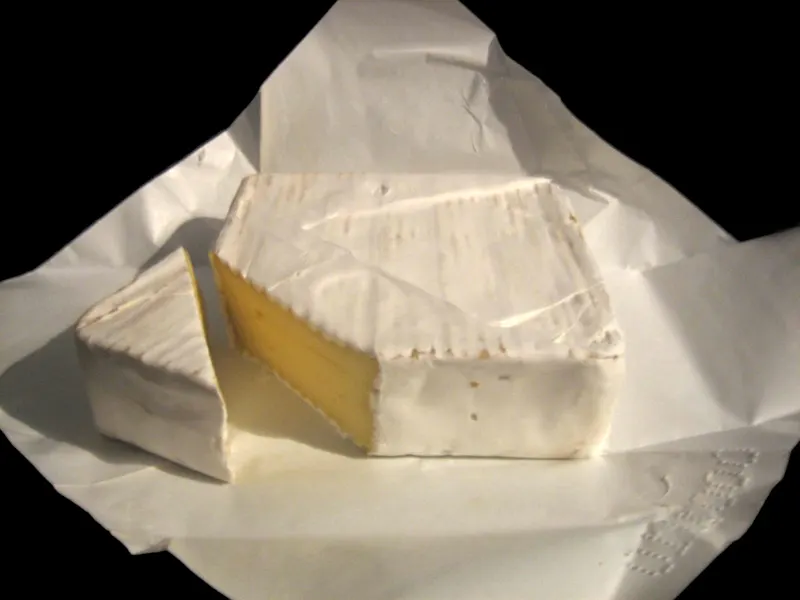
Carré de l'Est is a square, soft cow-milk cheese from Lorraine with a thick, downy white rind. In a 1967 study of industrial Carré de l'Est-type curds, starter-ripened milk was set with rennet, cut into small pieces, filled into square moulds and drained for about 20 hours. Over 29 days of ripening the pH of the paste rose from 4.8 to 6.85.
Amounts from a sourceAmounts from an industrial make of Carré de l'Est-type cheese in a dairy studied in 1967, given per 120 g of milk dry matter (about 1 litre of milk). The sources give no standard recipe.
Cow milk
Pasteurised at 72 °C for 60 seconds in the dairy studied in 1967; the 1953 USDA handbook says the French cheese is made from cow's whole milk, pasteurised or not[tourneur1967][plf-carre][usda-hb54]
Lactic starter (mixed culture grown on pasteurised milk)About 2 % of the milk
a mixed culture of lactic bacteria grown on pasteurised milk, about 2 % of the milk
Total time across the recorded steps: 30 days
Start
Drag the bar or press Play
What changes:A lactic starter goes into the pasteurised milk, which sours slowly at 34 °C
Step 1 of 4
Pasteurise and ripen the milk with starter
Time
2.5–3 h
Reported
Temperature
34 °C
Reported
Salt
None given
Acidity
Not documented
Which microbes the steps name, step by step
Penicillium caseicolum
Moulds
Values from the pasteurised-milk control cheeses in an industrial study of Carré de l'Est-type curds (Tourneur et al. 1967). Output: ripened milk.
Flavour
Not documented
Texture
Not documented
Colour
Not documented
Microbes at work in this step
Not documented for this step.
Method
Measured measured in a studySet fixed by a specification or tested recipeReported one source reports itTypical a general value, not sourced for this fermentUnconfirmed not yet checked against a source
At a glance
Carré de l'Est is a square, soft cow-milk cheese from Lorraine with a thick, downy white rind. In a 1967 study of industrial Carré de l'Est-type curds, starter-ripened milk was set with rennet, cut into small pieces, filled into square moulds and drained for about 20 hours. Over 29 days of ripening the pH of the paste rose from 4.8 to 6.85. Made in 4 steps over 30 days. The longest step, ripen under a white rind, takes 29 days (Tourneur C 1967). Penicillium caseicolum, the white felt on the rind does most of the fermenting.
Carré de l'Est is a square cheese from Lorraine, a Camembert-type cheese under a white mould rind. The 1953 USDA handbook says its curd is cut before dipping, unlike true Camembert, which speeds early drainage of whey. Its definition comes from a cheese decree, not from a protected origin.
Shape and size
Square, 8.5–11 cm a side and 2–3 cm thick, 100–300 g; a small and a large size also exist
Milk
Cow's whole milk, pasteurised or not (1953 USDA handbook); today mostly pasteurised or thermised and made in dairies (French dairy sector)
Ripening
About four weeks in the 1967 study, when the paste had reached pH 6.85
Petit Carré de l'Est2.5 to 2.9 inches a side and 4.4 to 5.6 oz (about 6.4–7.4 cm and 125–160 g).
Grand Carré de l'Est7 to 8.2 inches a side and 28.2 oz to 2.6 lb (about 18–21 cm and 0.8–1.2 kg).
Safety
Most Carré de l'Est is now made from pasteurised or thermised milk. In the 1967 study the fresh curds were at pH 4.45–4.65, and the pH rose to near neutral as the rind mould ripened the cheese. Carré de l'Est is a soft cheese under a white mould rind, made like Camembert. The UK NHS says pasteurised or unpasteurised mould-ripened soft cheeses with a white coating, such as brie and camembert, must be thoroughly cooked in pregnancy, because soft ripened cheeses may carry listeria.
The 1953 USDA handbook already lists Carré de l'Est as a Camembert-type cheese made in France, and notes that its curd is cut before dipping, which speeds early drainage of whey. The French dairy sector says its definition is set by the cheese decree of 27 April 2007 (décret 2007-628).