Side-by-side or overlay PDF diff driven by one engine that reads each file into a structured model — text, vector geometry, images, form fields, annotations — and compares the models. Moves show as moves, edits show only where they happened, and any PDF type works without picking a mode.
Open a STEP / STP part and it measures itself — volume, thinnest wall, draft and undercut checks on load, plus hole detection with a BOM. Measure, section, export STL. Rust + WASM B-rep kernel, runs in your browser.
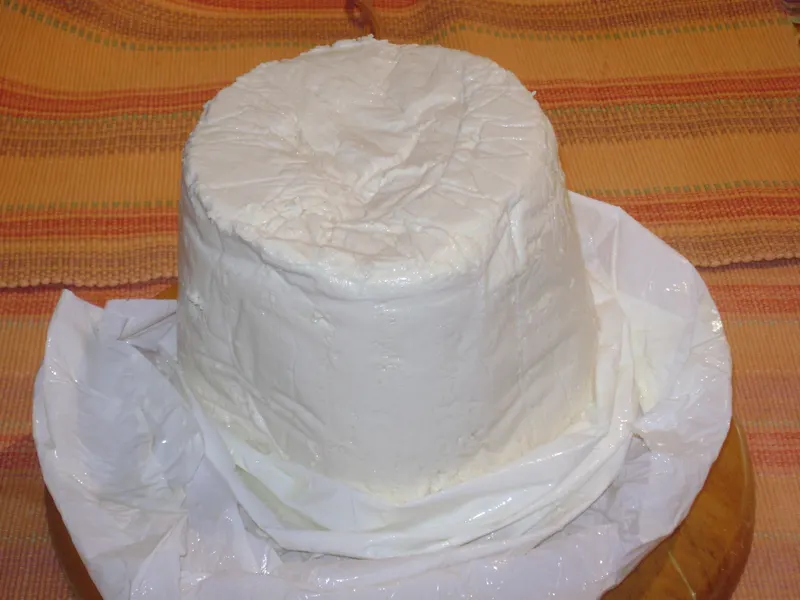
Anthotyros is a Greek whey cheese, made by heating the whey left from Feta or cooked hard cheeses, sometimes with milk added, until its proteins clot. It is a boundary entry. The fresh cheese is heat-set, not fermented, though lactic bacteria later grow in it during cold storage. A dry form is a matured cheese, similar to Myzithra.
No fixed amounts recordedThe sources give no fixed recipe or amounts.
Sheep or goat whey
From Feta or cooked hard cheeses such as Kefalotyri and Graviera; Wikipedia says milk and whey from sheep or goats are used, sometimes in combination[sameli2021][wp]
What changes:Whey from the day's cheesemaking goes into a vat
Step 1 of 4
Collect the whey
Time
Not documented
Temperature
Not documented
Salt
None given
Acidity
Not documented
Which microbes the steps name, step by step
Lactic acid bacteria
Whey left from Feta or cooked hard cheeses such as Kefalotyri and Graviera; some dairies add raw milk.
Flavour
Not documented
Texture
Not documented
Colour
Not documented
Microbes at work in this step
Not documented for this step.
Method
Measured measured in a studySet fixed by a specification or tested recipeReported one source reports itTypical a general value, not sourced for this fermentUnconfirmed not yet checked against a source
At a glance
Anthotyros is a Greek whey cheese, made by heating the whey left from Feta or cooked hard cheeses, sometimes with milk added, until its proteins clot. It is a boundary entry. The fresh cheese is heat-set, not fermented, though lactic bacteria later grow in it during cold storage. A dry form is a matured cheese, similar to Myzithra.
Like Myzithra it is a whey cheese set by heat, not by rennet or bacteria; no starter is added after heating. Dry anthotyros is a matured cheese similar to Myzithra, with 37.5 % moisture and 2.6 % salt in one sample.
Milk
Sheep or goat whey (sometimes combined), sometimes with milk
Composition, fresh
pH 6.1, moisture 71 %, fat 13 %, salt 0.6 % (mean of 4 retail samples)
Fresh anthotyrosSoft, with 0.6 % salt on average in 4 retail samples; kept cold.
Dry anthotyrosA matured cheese; 37.5 % moisture and 2.6 % salt in one sample.
Partly skimmed anthotyrosLess fat (12 % in 3 retail samples).
Safety
Fresh whey cheese is highly perishable because of its high pH and moisture. In a 2022 challenge study, Listeria monocytogenes added to vacuum-packed fresh anthotyros after heating grew by about 2 log10 CFU/g in 15 days, even at 4 °C.
Hazards the sources name: Listeria monocytogenes, which grew in the fresh cheese at its high pH even at 4 °C when added after heating.