Side-by-side or overlay PDF diff driven by one engine that reads each file into a structured model — text, vector geometry, images, form fields, annotations — and compares the models. Moves show as moves, edits show only where they happened, and any PDF type works without picking a mode.
Open a STEP / STP part and it measures itself — volume, thinnest wall, draft and undercut checks on load, plus hole detection with a BOM. Measure, section, export STL. Rust + WASM B-rep kernel, runs in your browser.
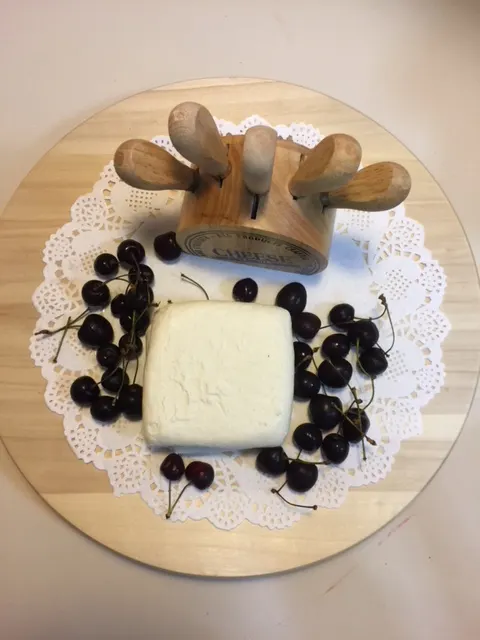
Akkawi is a white brined cheese of the Levant, most often made from cow milk. The milk is set with rennet, the curd is drained in hoops, pressed and put into brine; fresh Akkawi is ready in one or two days. Kept longer in brine, it becomes a firmer, more strongly flavoured mature cheese.
Streptococcus thermophilus and Lactobacillus delbrueckii subsp. bulgaricus as starter bacteria in a lab model of Akawi
Total time across the recorded steps: 14 days – 6 months
Start
Drag the bar or press Play
What changes:The milk is pasteurised before cheesemaking
Step 1 of 6
Pasteurise the milk
Time
30 min
Reported
Temperature
63–72 °C
Reported
Salt
None given
Acidity
Not documented
Which microbes the steps name, step by step
S. thermophilus
L. delbrueckii
Lactic acid bacteria
In one pilot make, half of the milk was skimmed and mixed back with full-fat milk, a local practice.
Flavour
Not documented
Texture
Not documented
Colour
Not documented
Microbes at work in this step
Not documented for this step.
Method
Measured measured in a studySet fixed by a specification or tested recipeReported one source reports itTypical a general value, not sourced for this fermentUnconfirmed not yet checked against a source
At a glance
Akkawi is a white brined cheese of the Levant, most often made from cow milk. The milk is set with rennet, the curd is drained in hoops, pressed and put into brine; fresh Akkawi is ready in one or two days. Kept longer in brine, it becomes a firmer, more strongly flavoured mature cheese. Made in 6 steps over 14 days – 6 months. The longest step, keep cold or mature in brine, takes 14 days – 6 months (Dimassi O 2025) and runs at 4 °C (Gandhi A 2016). Salt is 10 % (Gandhi A 2016). Streptococcus thermophilus and Lactobacillus delbrueckii subsp. bulgaricus, used as the starter in a lab model of Akawi does most of the fermenting.
Akkawi is pressed rennet curd; in one documented make, the Baladi curd was simply pressed to become Akkawi. It is traditionally not stretched, and in the same make, boiling the Akkawi blocks in water was the step that turned them into Halloum.
Fresh AkkawiMildly salty and elastic; keeps 2–4 weeks in refrigerated brine.
Mature Akkawi (Akkawi Tscheeky)Kept in brine for weeks to months; firmer, with a more concentrated flavour.
Safety
Akkawi is often eaten without cooking. In 50 Lebanese retail samples, E. coli was found in 40 (80 %), and all 40 failed both Lebanese standards (1000 CFU/g in 2002:223, 10 CFU/g in 2003:495). S. aureus was found in 16 (32 %); 8 of them (16 % of all samples) exceeded the older 1000 CFU/g limit and all 16 failed the newer 10 CFU/g limit. The authors link the contamination to deficiencies in or after pasteurisation, such as hand-packing in hoops and curing in brine, and to weak hygiene and unreliable power and clean water. Make it from pasteurised milk with good hygiene and keep it cold.
Hazards the sources name: Escherichia coli in 40 of 50 Lebanese retail samples (80 %); Staphylococcus aureus in 16 of 50 Lebanese retail samples (32 %).
The name links the cheese to the city of Acre in historical Palestine. The name Tscheeky for the mature form comes from cheese made in Czechia by Lebanese traders for export to the Arab world.