Side-by-side or overlay PDF diff driven by one engine that reads each file into a structured model — text, vector geometry, images, form fields, annotations — and compares the models. Moves show as moves, edits show only where they happened, and any PDF type works without picking a mode.
Open a STEP / STP part and it measures itself — volume, thinnest wall, draft and undercut checks on load, plus hole detection with a BOM. Measure, section, export STL. Rust + WASM B-rep kernel, runs in your browser.
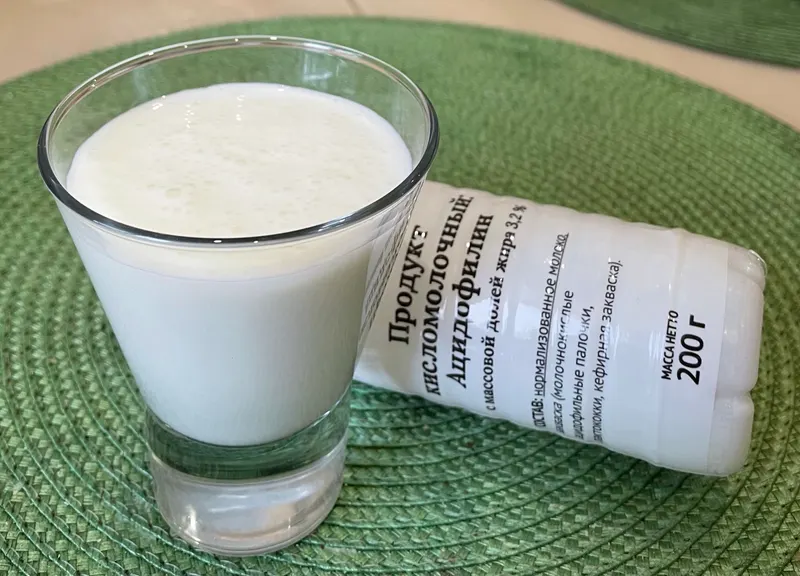
Acidophilin is a Soviet-era cultured milk soured with three starters in equal parts, the acidophilus bacterium, lactococci and a starter grown on kefir grains. It tastes slightly sharp and refreshing, and the standard allows a yeasty note and a few gas holes. The interstate standard GOST 31668-2012 defines it and sets its acidity.
defined culture (L. acidophilus, lactococci and kefir-grain starter in equal parts)
Total time across the recorded steps: 6 h – 8 h
Start
Drag the bar or press Play
What changes:The milk is pasteurised, then cooled for the starters
Step 1 of 4
Pasteurise and cool the milk
Time
Not documented
Temperature
88–92 °C
Reported
Salt
None given
Acidity
Not documented
Which microbes the steps name, step by step
L. acidophilus
The standard requires the heat treatment to meet the customs-union regulations but sets no temperature itself. Output: pasteurised milk.
Flavour
Not documented
Texture
Not documented
Colour
Not documented
Microbes at work in this step
most bacteria killed
Method
Measured measured in a studySet fixed by a specification or tested recipeReported one source reports itTypical a general value, not sourced for this fermentUnconfirmed not yet checked against a source
At a glance
Acidophilin is a Soviet-era cultured milk soured with three starters in equal parts, the acidophilus bacterium, lactococci and a starter grown on kefir grains. It tastes slightly sharp and refreshing, and the standard allows a yeasty note and a few gas holes. The interstate standard GOST 31668-2012 defines it and sets its acidity. Made in 4 steps over 6 h – 8 h. The longest step, ferment, takes 6–8 h (MilkLife (milklife.by) 2021) and runs at 31–35 °C (Patent RU 2102898 C1 1996). Lactobacillus acidophilus and Lactococci do most of the fermenting.
Acidophilin uses L. acidophilus like acidophilus milk, but adds lactococci and a kefir-grain starter in equal parts. The standard allows it a yeasty note and a few gas holes.
Acidophilus milk, acidophilus prostokvasha and acidophilus pasteru.wikipedia says these are made alongside acidophilin.
Safety
The milk is pasteurised and the product is soured to 75–130 °T. GOST 31668-2012 requires it to be kept at 4 ± 2 °C, with the shelf life set by the maker.
Production was first set up in the 1930s in the Armenian SSR by Levon A. Yerzinkyan, the inventor of Narine, and in some socialist countries (ru.wikipedia). The current interstate standard, GOST 31668-2012, came into force in 2013 and was amended in 2016.