Side-by-side or overlay PDF diff driven by one engine that reads each file into a structured model — text, vector geometry, images, form fields, annotations — and compares the models. Moves show as moves, edits show only where they happened, and any PDF type works without picking a mode.
Open a STEP / STP part and it measures itself — volume, thinnest wall, draft and undercut checks on load, plus hole detection with a BOM. Measure, section, export STL. Rust + WASM B-rep kernel, runs in your browser.
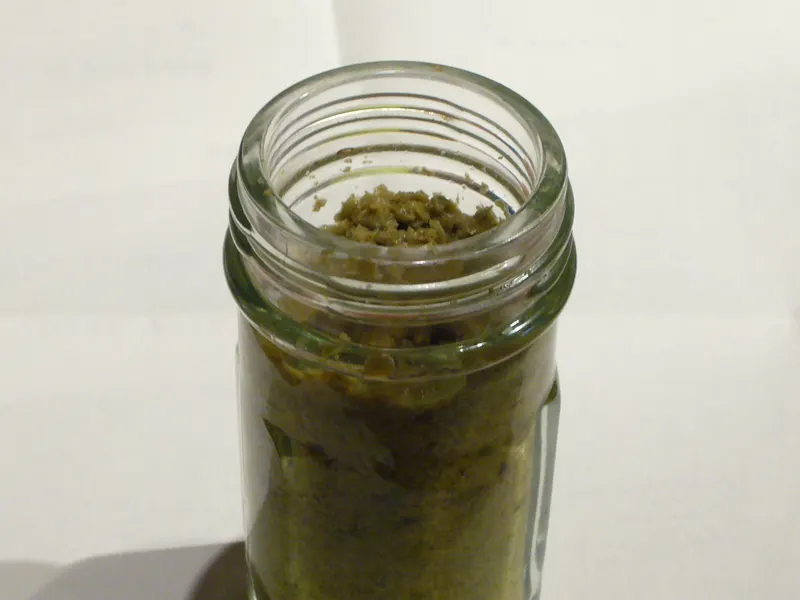
Yuzukoshō (柚子胡椒, salted yuzu peel and chilli paste)柚子胡椒
Yuzukoshō is a Kyushu paste of yuzu peel, chilli and salt; koshō means chilli in Kyushu dialects. In a home recipe from the food advisor Yoshie Kamiya, green yuzu peel and green chilli are each ground with 16–18 % of their weight in salt, pounded together in a mortar and then frozen or kept in the fridge. It is a boundary entry, a salt cure rather than a proven ferment: Wikipedia calls it fermented, but the other sources read here describe only a salt cure and none describes a microbial fermentation, and the paste is at its brightest within about 3 hours of making.
Amounts from a sourceHome recipe from Kamiya (2021) for the peel of 5 yuzu, with salt measured as 16–20 % of the weighed peel and of the weighed chilli; the food advisor Yoshie Kamiya gives about 5 yuzu and 5 chillies with 16–18 % salt in a 2021 macaroni feature. A second web recipe (HugKum) uses 100 g peel, 100 g chilli and 40 g salt, 20 % of the combined weight. The MAFF sheet for Fukuoka (recipe from Nakamura Gakuen University) uses 150 g green chilli and the peel of 10 yuzu, about 100 g; its printed salt amount of 1.5 g is far below the other recipes and is not used here.
Yuzu peelPeel of 5 yuzu, about 200 g
Washed and wiped dry, peeled thick, down to the flesh (white pith included), and weighed[kamiya2021][macaroni2021]
Green chilli60–80 g (about 5 chillies)
Stem removed, halved lengthways, seeds removed, white pith kept; adjust for heat[kamiya2021][macaroni2021]
SaltAbout 40 g
16–20 % of the peel weight and of the chilli weight (16–18 % in the macaroni feature); peel and chilli are each weighed and salted separately[kamiya2021][macaroni2021]
Start
Drag the bar or press Play
What changes:Yuzu peel is cut away thick and the chillies are split and seeded
Step 1 of 4
Peel the yuzu and seed the chillies
Time
Not documented
Temperature
Not documented
Salt
None given
Acidity
Not documented
Kamiya picks downward-fruiting chillies that are not as hot as takanotsume, so that they can be bitten. Output: weighed yuzu peel and seeded chillies.
Flavour
Not documented
Texture
Not documented
Colour
Not documented
Microbes at work in this step
Not documented for this step.
Method
Measured measured in a studySet fixed by a specification or tested recipeReported one source reports itTypical a general value, not sourced for this fermentUnconfirmed not yet checked against a source
At a glance
Yuzukoshō is a Kyushu paste of yuzu peel, chilli and salt; koshō means chilli in Kyushu dialects. In a home recipe from the food advisor Yoshie Kamiya, green yuzu peel and green chilli are each ground with 16–18 % of their weight in salt, pounded together in a mortar and then frozen or kept in the fridge. It is a boundary entry, a salt cure rather than a proven ferment: Wikipedia calls it fermented, but the other sources read here describe only a salt cure and none describes a microbial fermentation, and the paste is at its brightest within about 3 hours of making. Salt is 16–20 % (Kamiya Y. 2021).
Red-chilli yuzukoshōSome versions use red chillies and give an orange paste (Wikipedia). MAFF says green chillies are usually hotter and red ones more fragrant.
Tankan koshōA similar paste made with tankan, a more orange-like citrus (Wikipedia).
Safety
Kamiya says that below 15 % salt the paste dries out and loses colour, which makes it unfit for storage; she suggests 16–20 % (16–18 % in the macaroni feature) for home making and freezing for long keeping, and notes some commercial pastes are above 20 %. Sea salt with less sodium chloride needs a higher amount (Kamiya).
Discover Japan places the origin at Hita in Ōita, near the former Amagase town, and says households had long made it. MAFF says the place of origin is disputed and that one account links it to Mount Hiko in Fukuoka, where mountain ascetics (yamabushi) used the yuzu there as medicine. Wikipedia adds Soeda in Fukuoka and a garden on Mount Hiko where the yamabushi first made it. Kamiya, who comes from Usa in Ōita, says it came from not wasting the green fruit thinned in September. It spread after it was sold as a souvenir at Yufuin Onsen and after the Kyushu soy sauce maker Fundokin began making it (Wikipedia).
Starter
The sources we found do not say how its fermentation begins.