Side-by-side or overlay PDF diff driven by one engine that reads each file into a structured model — text, vector geometry, images, form fields, annotations — and compares the models. Moves show as moves, edits show only where they happened, and any PDF type works without picking a mode.
Open a STEP / STP part and it measures itself — volume, thinnest wall, draft and undercut checks on load, plus hole detection with a BOM. Measure, section, export STL. Rust + WASM B-rep kernel, runs in your browser.
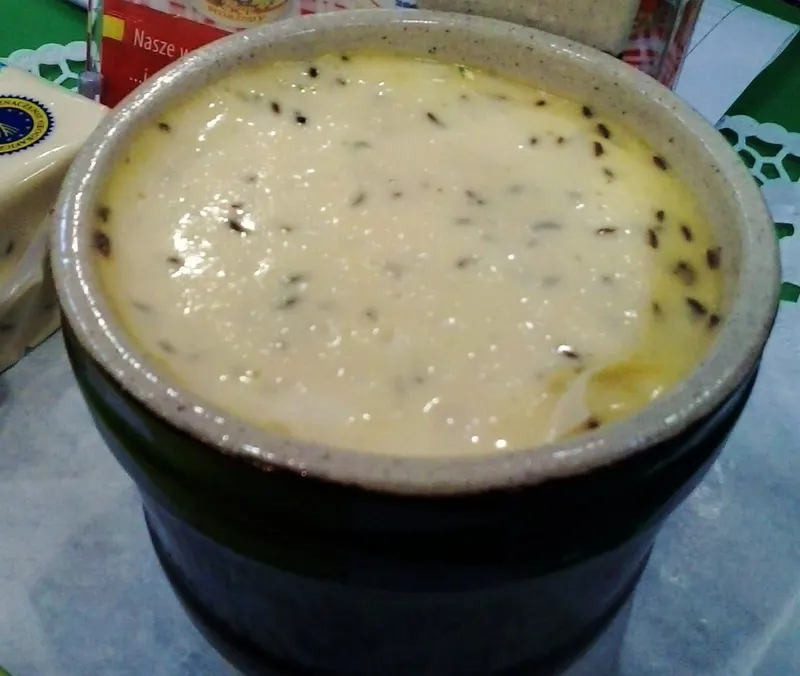
Wielkopolski ser smażony is a spreadable cheese made by ripening crumbled sour-milk curd (twaróg) for two to three days until it turns glassy and pungent, then frying it with butter and salt. The skimmed milk is soured with lactic streptococci, and the whole cycle from milk to finished cheese is meant to take no more than six or seven days. Melting salts are banned, so the curd has to ripen before it will melt.
Amounts from a sourceThe specification sets process limits and the 2 % starter dose, not a full recipe. The hot cheese is most often poured into 200 g cups.
zakwas, pasteurised milk grown 8–10 h at 25 °C with lactic streptococci
Total time across the recorded steps: 3.1 days – 4.1 days
Start
Drag the bar or press Play
What changes:Cream is spun out of the raw milk, leaving skimmed milk
Step 1 of 9
Store and skim the milk
Time
up to 24 h
Set
Temperature
up to 6 °C
Set
Salt
None given
Acidity
Not documented
Flavour
Not documented
Texture
Not documented
Colour
Not documented
Microbes at work in this step
Not documented for this step.
Method
Measured measured in a studySet fixed by a specification or tested recipeReported one source reports itTypical a general value, not sourced for this fermentUnconfirmed not yet checked against a source
At a glance
Wielkopolski ser smażony is a spreadable cheese made by ripening crumbled sour-milk curd (twaróg) for two to three days until it turns glassy and pungent, then frying it with butter and salt. The skimmed milk is soured with lactic streptococci, and the whole cycle from milk to finished cheese is meant to take no more than six or seven days. Melting salts are banned, so the curd has to ripen before it will melt. Made in 9 steps over 3.1 days – 4.1 days. The longest step, crumble and ripen on trays (gliwienie), takes 2–3 days (European Commission 2008) and runs at 16–27 °C (European Commission 2008). Lactic streptococci of the starter, which sour the milk into twaróg does most of the fermenting.
Unlike acid-curd cheeses that are shaped and ripened whole, here the curd is crumbled, ripened for only two to three days, then melted with butter, so the ripening, not added salts, is what makes it melt. The specification bans melting salts and any fat other than butter.
Milk
Skimmed cow milk soured into twaróg
Ripening
Crumbled curd ripened 2–3 days at 16–27 °C before frying
Composition
pH 5.2–5.6; water at most 65 %; fat at least 7.5 %
Whole cycle
From milk collection to finished cheese in no more than six or seven days (a 2026 request would allow ten)
Naturalny (plain)No additions besides butter and salt.
Z kminkiem (with caraway)Caraway is mixed in during frying; the seeds show in the cheese.
Safety
The specification requires no coagulase-positive staphylococci in 0.1 g and no more than 100 moulds per gram. The milk is heated to 70–75 °C, and the curd is fried at 90 °C or more and packed hot.
Hazards the sources name: Coagulase-positive staphylococci (Staphylococcus aureus), which must be absent in 0.1 g.
The specification says the frying of the cheese was most probably begun by Olęder settlers, colonists who came to western Wielkopolska from the late 18th century. It says the ripening and frying were first done to make the cheese last longer for eating. Cookbooks from Toruń (1885), Poznań (1899) and the Kucharz wielkopolski (1904) give recipes. It was entered in the EU register as a PGI by Commission Regulation (EC) No 323/2009 of 20 April 2009.