Side-by-side or overlay PDF diff driven by one engine that reads each file into a structured model — text, vector geometry, images, form fields, annotations — and compares the models. Moves show as moves, edits show only where they happened, and any PDF type works without picking a mode.
Open a STEP / STP part and it measures itself — volume, thinnest wall, draft and undercut checks on load, plus hole detection with a BOM. Measure, section, export STL. Rust + WASM B-rep kernel, runs in your browser.
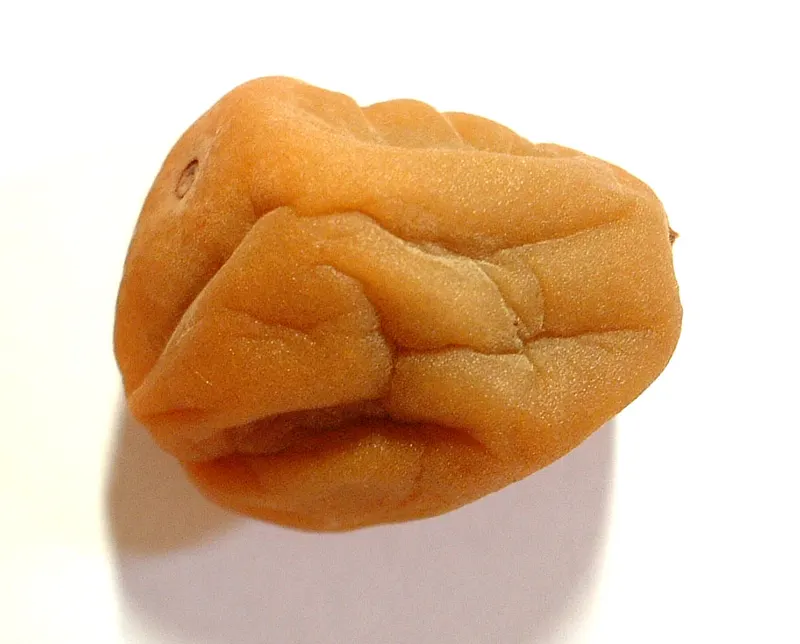
Ripe ume are packed with 20 % salt under a weight until their own sour juice, umezu, covers them. After about a month they are sun-dried for three or four days in high summer; some are coloured red with salted red shiso.
Amounts from a sourceJA Wakayama's recipe for one tub, published by MAFF. The Wakayama recipe uses only ume and salt; the MAFF food-education recipe adds red shiso after the sun-drying.
What changes:Starting material: ripe yellow ume, washed and wiped dry
Step 1 of 6
Wash and dry ripe ume
Time
Not documented
Temperature
Not documented
Salt
None given
Acidity
Not documented
Remove the stem ends with a toothpick and dry the fruit well; wet or dirty fruit grows mould. Output: clean, dry fruit.
Flavour
Not documented
Texture
Not documented
Colour
yellow, ripe
Microbes at work in this step
Not documented for this step.
Method
Measured measured in a studySet fixed by a specification or tested recipeReported one source reports itTypical a general value, not sourced for this fermentUnconfirmed not yet checked against a source
At a glance
Ripe ume are packed with 20 % salt under a weight until their own sour juice, umezu, covers them. After about a month they are sun-dried for three or four days in high summer; some are coloured red with salted red shiso. Made in 6 steps over 2.2 months. The longest step, keep in the umezu, takes 30 days (MAFF (Ministry of Agriculture). Salt is 20 % (MAFF (Ministry of Agriculture).
Umeboshi is a salt cure more than a fermentation; the salt and the fruit's own acid keep it. It is dried in the sun after salting; umezuke is not dried, and karikari ume are unripe and crunchy.
Seasoned umeboshi (chōmi umeboshi)Umeboshi soaked again in sugar, vinegar, ume vinegar or spices; a separate JAS class.
ShikinbaiIbaraki's crushed, stoned ume with 10–15 % salt and red shiso (see shikinbai).
Safety
Keep the salt at 20 %; MAFF warns that cutting it can make the batch fail, and the salt is what lets umeboshi keep. Japan's JAS standard requires umezuke and umeboshi to be pH 3.0 or lower. Wash and dry the fruit and the container well, since wet or dirty fruit grows mould. Film-forming yeasts can eat the acids, raise the pH and soften the fruit (Onda et al.). Raw green ume contain cyanide compounds and MAFF says not to eat them. It says these compounds are reported to break down as the fruit is processed and aged into umeboshi.
In the Edo period the Tanabe domain of Kishu had much poor land. Its chief retainer, Andō Naotsugu, encouraged farmers to grow the wild 'yabu-ume' there, and Tanabe ume came to be praised in Edo. Demand rose with wartime rations and the cholera and dysentery outbreaks of the 1880s. The large Nankō ume was registered in 1965, and Wakayama now grows about 60 % of Japan's ume.
Starter
The sources we found do not say how its fermentation begins.