Side-by-side or overlay PDF diff driven by one engine that reads each file into a structured model — text, vector geometry, images, form fields, annotations — and compares the models. Moves show as moves, edits show only where they happened, and any PDF type works without picking a mode.
Open a STEP / STP part and it measures itself — volume, thinnest wall, draft and undercut checks on load, plus hole detection with a BOM. Measure, section, export STL. Rust + WASM B-rep kernel, runs in your browser.
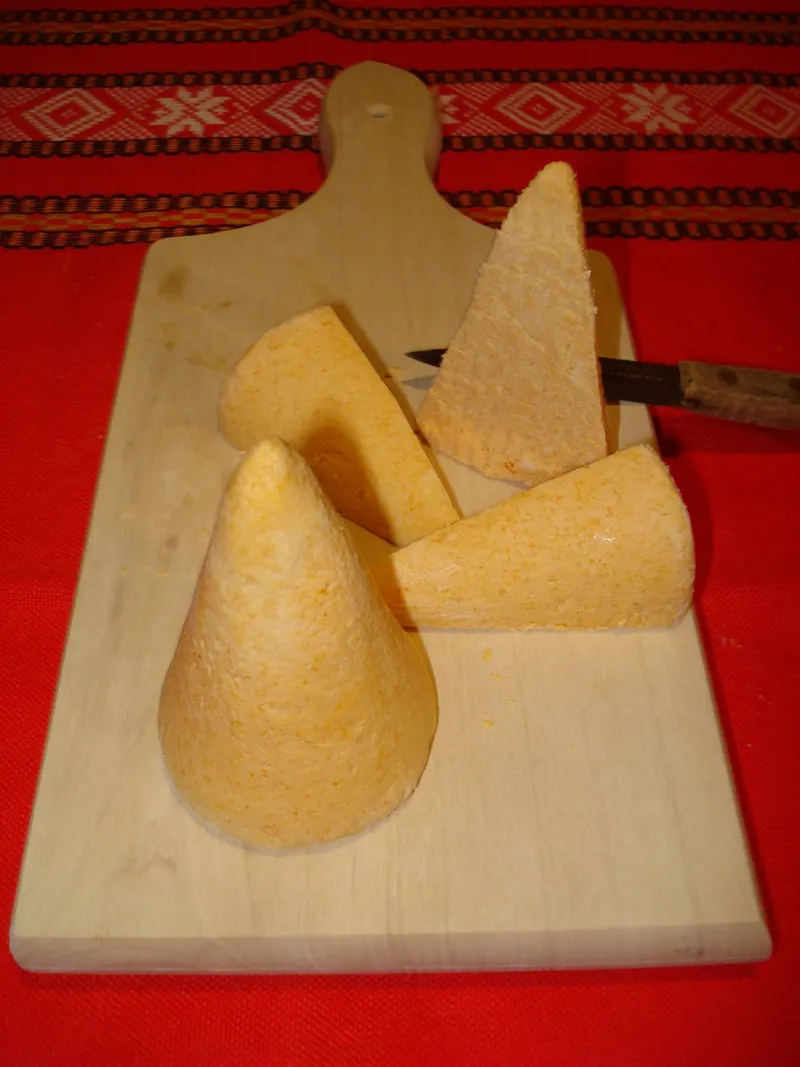
Raw cow milk is left to sour on its own for two days at about 27 °C, the sour cream is skimmed off, and the skimmed sour milk is warmed at 42 °C for 3 hours until the curd separates. The curd drains 24 hours in cloth, is mixed with salt and red paprika, shaped by hand into cones and dried for 7 days.
Amounts from a sourceValkaj et al. describe farm batches soured in a 2.5–5 litre jar (traditionally a 2–3 litre clay pot). The salt and pepper amounts are per 1000 g of fresh cheese, after Tišlarić (1992).
What changes:Over two days the raw milk, with no starter, sours to below pH 4.6
Step 1 of 7
Sour the milk
Time
2 days
Reported
Temperature
27 °C
Reported
Salt
None given
Acidity
pH up to 4.6
Reported
Flavour
Not documented
Texture
Not documented
Colour
Not documented
Microbes at work in this step
Not documented for this step.
Method
Measured measured in a studySet fixed by a specification or tested recipeReported one source reports itTypical a general value, not sourced for this fermentUnconfirmed not yet checked against a source
At a glance
Raw cow milk is left to sour on its own for two days at about 27 °C, the sour cream is skimmed off, and the skimmed sour milk is warmed at 42 °C for 3 hours until the curd separates. The curd drains 24 hours in cloth, is mixed with salt and red paprika, shaped by hand into cones and dried for 7 days. Made in 7 steps over 10 days. The longest step, dry, takes 7 days (Valkaj K 2014) and runs at 19–22 °C (Valkaj K 2014). Salt is 3.8 % (Valkaj K 2014).
Farm Turoš sours on its own in two days and is skimmed, so it is leaner and saltier than the dairy-made kind; in a blind test 97% of 200 local consumers could tell it from the neighbouring Prgica and Kvargl.
Composition
Farm cheeses (n=15), mean: fat 14.90, protein 28.80 and total solids 57.28 g per 100 g; semi-hard
Industrial Turoš
Made from pasteurised milk with starter cultures and a tenth of the usual rennet dose, which sours it in seventeen hours; fattier (25.00–37.75 g/100 g) and less salty (1.85–2.67%)
The milk sours below pH 4.6, and the finished cones measured pH 4.45 with about 3.8% salt. In a second study by the same group, microbiological analysis showed all the analysed Turoš cheeses met the hygiene requirement; that covers those samples, not every batch. The milk is raw, no starter is added and the sour milk is warmed only to 42 °C. The CDC says raw-milk products can expose people to germs such as Listeria, E. coli, Brucella and Salmonella, so neither the souring nor that result makes a home batch safe.
Valkaj et al. record Turoš on family farms in Međimurje and among the Pomurje Croats of Zala County in Hungary, citing Kerecsényi (1983) and Andrić et al. (2003).