Side-by-side or overlay PDF diff driven by one engine that reads each file into a structured model — text, vector geometry, images, form fields, annotations — and compares the models. Moves show as moves, edits show only where they happened, and any PDF type works without picking a mode.
Open a STEP / STP part and it measures itself — volume, thinnest wall, draft and undercut checks on load, plus hole detection with a BOM. Measure, section, export STL. Rust + WASM B-rep kernel, runs in your browser.
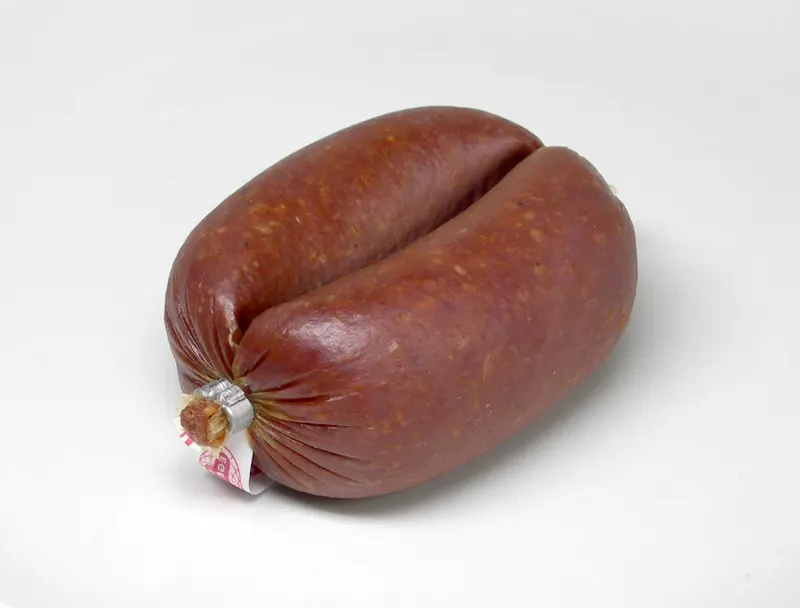
Sucuk is Turkey's dry fermented sausage. Minced beef and fat are mixed with salt, garlic, cumin, red and black pepper and a curing salt, stuffed into casings and ripened for one to three weeks while the temperature and humidity are stepped down. Under Turkish food law it is not heat-treated and must reach pH 5.4 or lower.
Sodium nitrite (fast ripening) or potassium nitrate (slow ripening)150 mg/kg
That is 0.15 g per kg of meat and fat, as the pure chemical. Too much is poisonous.[kaya2024]
Starter
defined culture (industrial) or spontaneous
Total time across the recorded steps: 9 days – 23 days
Start
Drag the bar or press Play
What changes:Lean beef and fat are minced together
Step 1 of 5
Mince the meat and fat
Time
Not documented
Temperature
Not documented
Salt
None given
Acidity
Not documented
Which microbes the steps name, step by step
Lactic acid bacteria
Lean beef and fat in a 4:1 ratio are chopped in a bowl cutter.
Flavour
Not documented
Texture
Not documented
Colour
Not documented
Microbes at work in this step
Not documented for this step.
Method
Measured measured in a studySet fixed by a specification or tested recipeReported one source reports itTypical a general value, not sourced for this fermentUnconfirmed not yet checked against a source
At a glance
Sucuk is Turkey's dry fermented sausage. Minced beef and fat are mixed with salt, garlic, cumin, red and black pepper and a curing salt, stuffed into casings and ripened for one to three weeks while the temperature and humidity are stepped down. Under Turkish food law it is not heat-treated and must reach pH 5.4 or lower. Made in 5 steps over 9 days – 23 days. The longest step, ripen and dry, takes 6–20 days (Kaya M 2024) and runs at 15–17 °C (Kaya M 2024). Salt is 2.5 % (Kaya M 2024). Lactic acid bacteria (Lactiplantibacillus plantarum) and coagulase-negative staphylococci (Staphylococcus xylosus); local strains tested as starters and Lactiplantibacillus plantarum (60 of 95 lactic isolates), L. paraplantarum (18) and Latilactobacillus sakei (13); Staphylococcus xylosus (24 of 50 staphylococcal isolates) and S. saprophyticus (10), isolated from traditionally produced sucuk do most of the fermenting.
Sucuk is a beef sausage seasoned with garlic and cumin, and Turkish law defines it as a fermented and dried product with no heat treatment. Heat-treated sucuk is a separate product with a pH limit of 5.6.
Heat-treated sucuk (ısıl işlem görmüş sucuk)Fermented, then heat-treated; pH up to 5.6 and meat protein at least 14 %.
Safety
Turkish food law sets a pH of at most 5.4 for sucuk and at most 5.6 for heat-treated sucuk, and limits the moisture relative to the meat protein. These are product limits, and meeting them does not make raw meat safe. Sucuk gets no heat treatment while it is made, and a survey of 132 samples found Salmonella in 2 and Listeria monocytogenes in 2. CDC advises anyone pregnant, aged 65 or older or with a weakened immune system to heat fermented or dry sausage until steaming hot. Nitrite is poisonous in excess. Too much stops the blood carrying oxygen and can kill. The study used 0.15 g per kg, so this amount cannot be judged by eye. The recipe is from a university trial and was not tested as a home method.
Hazards the sources name: Salmonella spp. and Listeria monocytogenes (each in 2 of 132 sucuk samples from Turkish producers and retailers; E. coli O157 in none).