Side-by-side or overlay PDF diff driven by one engine that reads each file into a structured model — text, vector geometry, images, form fields, annotations — and compares the models. Moves show as moves, edits show only where they happened, and any PDF type works without picking a mode.
Open a STEP / STP part and it measures itself — volume, thinnest wall, draft and undercut checks on load, plus hole detection with a BOM. Measure, section, export STL. Rust + WASM B-rep kernel, runs in your browser.
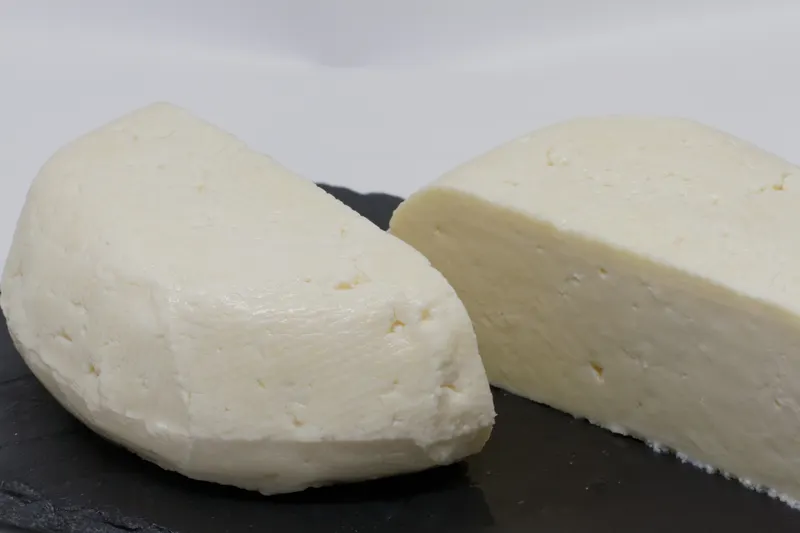
A boundary entry, close to unfermented. Pasteurised cow milk with calcium chloride is set with rennet at about 34 °C in 40–45 minutes, cut to 1 cm cubes, partly drained and salted in the curd. The curd is moulded in basket-type plastic forms, then packed and kept chilled; the cheese is white with an inverted truncated-cone shape. One study held the pH at 6.8 until draining, and another notes little or no starter acidification, so little acid forms.
Amounts from a sourceAmounts are per 100 litres of milk, from two university lab recipes; one follows the process set out by Villegas de Gante and Santos Moreno.
Total time across the recorded steps: 1.7 h – 1.8 h
Start
Drag the bar or press Play
What changes:Starting material: pasteurised milk warmed to 34 °C
Step 1 of 6
Warm the milk and add calcium chloride
Time
Not documented
Temperature
34 °C
Reported
Salt
None given
Acidity
Not documented
Flavour
Not documented
Texture
Not documented
Colour
Not documented
Microbes at work in this step
Not documented for this step.
Method
Measured measured in a studySet fixed by a specification or tested recipeReported one source reports itTypical a general value, not sourced for this fermentUnconfirmed not yet checked against a source
At a glance
A boundary entry, close to unfermented. Pasteurised cow milk with calcium chloride is set with rennet at about 34 °C in 40–45 minutes, cut to 1 cm cubes, partly drained and salted in the curd. The curd is moulded in basket-type plastic forms, then packed and kept chilled; the cheese is white with an inverted truncated-cone shape. One study held the pH at 6.8 until draining, and another notes little or no starter acidification, so little acid forms. Made in 6 steps over 1.7 h – 1.8 h. The longest step, mould in baskets, takes 1 h (Ochoa-Flores A.A 2013). Salt is 600 % (Sánchez-Zamora N 2022).
Panela is set with rennet and salted in the curd, then drained in basket moulds that give its cone shape. It is barely soured and eaten fresh, so it belongs at the edge of fermented foods.
Shape
White, inverted truncated cone from the basket mould
A very perishable fresh cheese with high water activity; it should be stored below 5 °C. Because of Listeria, the US CDC tells pregnant women, adults aged 65 or over and people with weak immunity to avoid unheated queso fresco-type cheese, even from pasteurised milk, unless it is heated to 74 °C or steaming hot.
Panela is a cheese of popular consumption in Mexico; national output was 51.34 thousand tonnes in 2018 and 52.10 thousand tonnes in 2019. Parra-Ocampo, citing the Mexican agriculture ministry, ranks it the third most produced cheese in Mexico in 2018, at 11.7% of the total.
Starter
The sources we found do not say how its fermentation begins.