Side-by-side or overlay PDF diff driven by one engine that reads each file into a structured model — text, vector geometry, images, form fields, annotations — and compares the models. Moves show as moves, edits show only where they happened, and any PDF type works without picking a mode.
Open a STEP / STP part and it measures itself — volume, thinnest wall, draft and undercut checks on load, plus hole detection with a BOM. Measure, section, export STL. Rust + WASM B-rep kernel, runs in your browser.
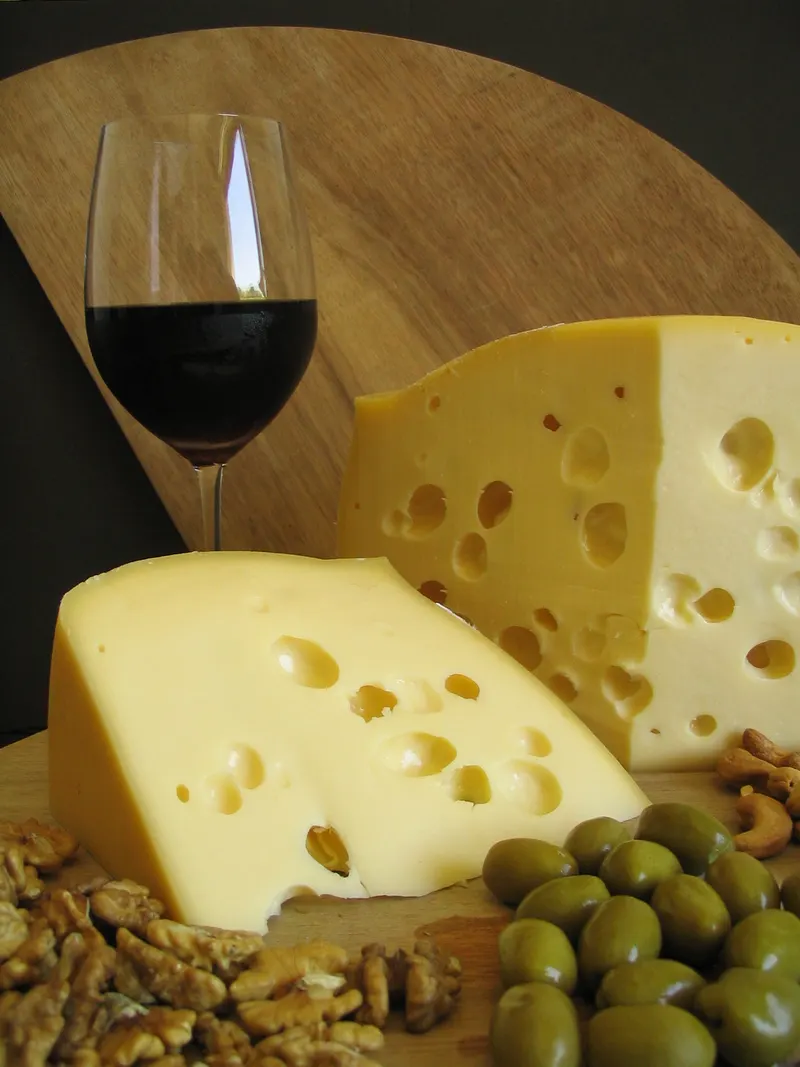
Uruguay's Swiss-style eyed cheese, a cow-milk cheese. In the LATU trial the pasteurised milk was set with lactic and propionic starters, the curd was cut small, cooked at 48 °C, pressed and brined. It ripens in four stages - drying, about ten days cold, a warm room where propionic bacteria make the eyes, then cool storage.
No fixed amounts recordedA LATU trial batch of 1,100 litres of pasteurised milk, moulded into cheeses of 7 kg final weight. Industrial practice varies.
Cow milk
The LATU trial used 1,100 litres of pasteurised milk; the study does not name the animal, and Spanish Wikipedia calls Colonia a cow-milk cheese[crosa2008][wp-es]
Total time across the recorded steps: 13 days – 16 days
Start
Drag the bar or press Play
What changes:Heat kills most microbes in the milk before the starters go in
Step 1 of 10
Pasteurise the milk
Time
Not documented
Temperature
Not documented
Salt
None given
Acidity
Not documented
Which microbes the steps name, step by step
Lactic acid bacteria
The LATU trial used pasteurised milk; the study gives no time or temperature.
Flavour
Not documented
Texture
Not documented
Colour
Not documented
Microbes at work in this step
Not documented for this step.
Method
Measured measured in a studySet fixed by a specification or tested recipeReported one source reports itTypical a general value, not sourced for this fermentUnconfirmed not yet checked against a source
At a glance
Uruguay's Swiss-style eyed cheese, a cow-milk cheese. In the LATU trial the pasteurised milk was set with lactic and propionic starters, the curd was cut small, cooked at 48 °C, pressed and brined. It ripens in four stages - drying, about ten days cold, a warm room where propionic bacteria make the eyes, then cool storage. Made in 10 steps over 13 days – 16 days. The longest step, cold ripening, takes 10–12 days (Crosa M.J 2008) and runs at 8–11 °C (Crosa M.J 2008). Lactic acid bacteria and Propionic acid bacteria do most of the fermenting.
Queso Colonia follows Swiss eyed-cheese practice brought to Uruguay by settlers, but its ripening is split into a cold stage of about ten days and a warm room; LATU found the move is best made from day 11, once the paste has softened.
Size
7 kg wheels in the LATU trial
Eyes
Formed by propionic bacteria in a warm room after the cold stage
The LATU study reports no microbiological or safety data; its milk was pasteurised. As a general hazard for Swiss-type eyed cheeses, not measured in Colonia, Clostridium tyrobutyricum is considered the main cause of severe late blowing, a gas defect that spoils the paste. A 2020 study of it tested 37, 20 and 14 °C, choosing 20 °C because Swiss Emmental is first ripened at about 20 to 24 °C.
Swiss immigrants settled in the Colonia department in the second half of the 19th century. In 1868 Juan Teófilo Karlen left Diemtigen in the canton of Bern for Nueva Helvecia with his family and a copper cheese kettle, and set up the colony's first cheese dairy. LATU noted in 2008 that the cheese still had no protected designation.