Side-by-side or overlay PDF diff driven by one engine that reads each file into a structured model — text, vector geometry, images, form fields, annotations — and compares the models. Moves show as moves, edits show only where they happened, and any PDF type works without picking a mode.
Open a STEP / STP part and it measures itself — volume, thinnest wall, draft and undercut checks on load, plus hole detection with a BOM. Measure, section, export STL. Rust + WASM B-rep kernel, runs in your browser.
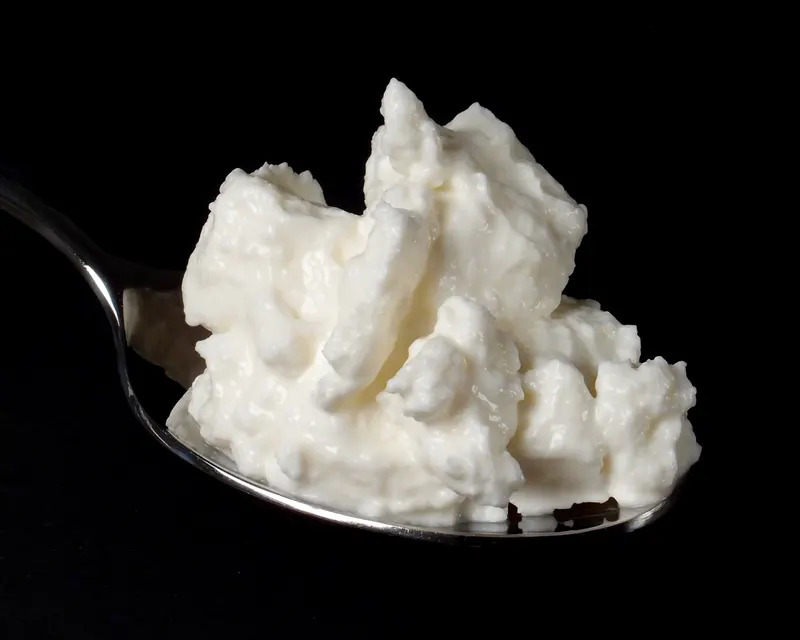
Skim milk is heated hard, cooled, and soured for about 16 hours with a mesophilic lactic culture and a very small dose of rennet until it sets at about pH 4.5–4.7. The soft curd is drained in cloth bags or, in dairies, spun in a separator, giving a fresh sour-milk cheese that is kept cold.
What changes:Skim milk is pasteurised at high heat, which also binds whey proteins into the curd
Step 1 of 5
Heat the skim milk
Time
5–15 min
Reported
Temperature
85–95 °C
Reported
Salt
None given
Acidity
Not documented
Which microbes the steps name, step by step
Lactobacillus
Output: heated skim milk.
Flavour
Not documented
Texture
Not documented
Colour
Not documented
Microbes at work in this step
this is a high-temperature pasteurisation; Tetra Pak says pasteurisation must kill pathogenic bacteria but that spores survive it, and this one raises quark yield
Method
Measured measured in a studySet fixed by a specification or tested recipeReported one source reports itTypical a general value, not sourced for this fermentUnconfirmed not yet checked against a source
At a glance
Skim milk is heated hard, cooled, and soured for about 16 hours with a mesophilic lactic culture and a very small dose of rennet until it sets at about pH 4.5–4.7. The soft curd is drained in cloth bags or, in dairies, spun in a separator, giving a fresh sour-milk cheese that is kept cold. Made in 5 steps over 36 h – 38 h. The longest step, drain off the whey, takes 20 h (Lepesioti S 2021) and runs at 58–60 °C (Tetra Pak). Lactobacillus lactis/cremoris does most of the fermenting.
Quark is set mostly by acid, with only a tenth of a normal rennet dose, and is usually eaten unripened. Cottage cheese is also set mainly by acid, but Wikipedia describes its grains as chewier than quark, and quark is drained or separated into a smooth paste.
Milk
Usually skim milk
Setting
About 16 h to pH 4.5–4.7 with a mesophilic culture and a tenth of a normal rennet dose
TopfenThe Austrian name; Wikipedia lists Topfenstrudel as quark strudel, and notes that Austrian varieties hold less whey and are drier and more solid than German ones.
TvorogA drier fresh acid-curd cheese, closely related to quark and popular in Eastern and Central Europe.
Safety
In the dairy process described by Tetra Pak, the skim milk is heated at 85–95 °C for 5–15 minutes before souring, and the packed quark is cooled to a cold-store temperature below 8 °C.
The German word Quark has been documented since the 14th century and is thought to come from a West Slavic word such as Polish twaróg. Wikipedia says Tacitus may describe it in Germania as lac concretum, though the phrase could also mean soured milk or another fresh cheese. In the 19th century quark was made entirely for home use. The Tetra Pak handbook says it was first drained in cloth bags and that most quark is now made by continuous concentration, mostly centrifugal separation.