Side-by-side or overlay PDF diff driven by one engine that reads each file into a structured model — text, vector geometry, images, form fields, annotations — and compares the models. Moves show as moves, edits show only where they happened, and any PDF type works without picking a mode.
Open a STEP / STP part and it measures itself — volume, thinnest wall, draft and undercut checks on load, plus hole detection with a BOM. Measure, section, export STL. Rust + WASM B-rep kernel, runs in your browser.
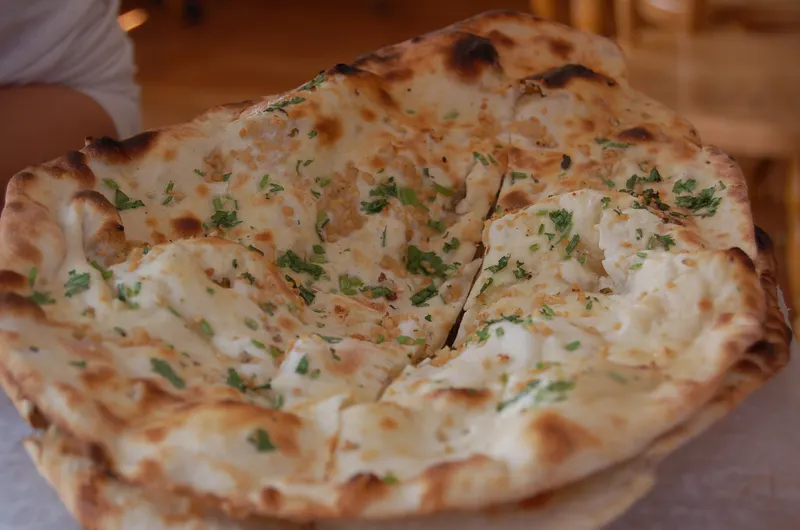
Curd- or khamir-leavened breads (bhatura, kulcha, naan, khamiri roti)भटूरा
These North Indian and Pakistani wheat breads are leavened with curd (yogurt), an old-dough starter called khameer or malera, or yeast. A soft dough is kneaded with curd or starter and left to ferment, for 4 hours in one laboratory naan method and overnight for bhatura. It is then baked in a tandoor (naan, kulcha, roti) or deep-fried (bhatura).
Amounts from a sourceParts by weight for naan, from the laboratory method of Rahim et al. (1993) built on a survey of restaurants, as cited in Hashmi's 1996 thesis. Bhatura and kulcha recipes vary.
Farinograph water absorption plus 1–3 % extra[hashmi1996]
Khameer or malera (old-dough starter)
Used for bhatura and kulcha instead of, or with, curd[rawat2018]
Starter
curd (yogurt lactic bacteria), an old-dough starter (khameer or malera), or yeast
Total time across the recorded steps: 4.1 h
Start
Drag the bar or press Play
What changes:Flour, curd, milk and a little salt are kneaded into a soft dough
Step 1 of 4
Knead the dough with curd or starter
Time
3 min
Reported
Temperature
Not documented
Salt
1 %
Reported
Acidity
Not documented
Which microbes the steps name, step by step
Lactic acid bacteria
Yeasts
Output: soft dough.
Flavour
Not documented
Texture
Not documented
Colour
Not documented
Microbes at work in this step
Not documented for this step.
Method
Measured measured in a studySet fixed by a specification or tested recipeReported one source reports itTypical a general value, not sourced for this fermentUnconfirmed not yet checked against a source
At a glance
These North Indian and Pakistani wheat breads are leavened with curd (yogurt), an old-dough starter called khameer or malera, or yeast. A soft dough is kneaded with curd or starter and left to ferment, for 4 hours in one laboratory naan method and overnight for bhatura. It is then baked in a tandoor (naan, kulcha, roti) or deep-fried (bhatura). Made in 4 steps over 4.1 h. The longest step, rest and ferment, takes 4 h (Hashmi I.A. 1996). Salt is 1 % (Hashmi I.A. 1996). Lactic bacteria reported for kulcha, jalebi and other sweet Indian wheat ferments does most of the fermenting.
These breads are leavened with curd or an old-dough starter, often with a little soda or yeast, and baked for only a minute or two in a very hot tandoor. Bhatura is the same kind of dough deep-fried.
Wikipedia says the earliest mention of naan in South Asia comes from the Indo-Persian poet Amir Khusrau in the 1300s, during the Delhi Sultanate, who names a thin naan-e-tunuk and a heavy naan-e-tanuri baked in the tandoor. In the Mughal era of the 1520s naan was a delicacy for nobles, and by the 1700s it had reached ordinary people in Mughal cultural centres. Bhatura, with puri, was part of the cuisine of Hindus in the Mughal Empire.