Side-by-side or overlay PDF diff driven by one engine that reads each file into a structured model — text, vector geometry, images, form fields, annotations — and compares the models. Moves show as moves, edits show only where they happened, and any PDF type works without picking a mode.
Open a STEP / STP part and it measures itself — volume, thinnest wall, draft and undercut checks on load, plus hole detection with a BOM. Measure, section, export STL. Rust + WASM B-rep kernel, runs in your browser.
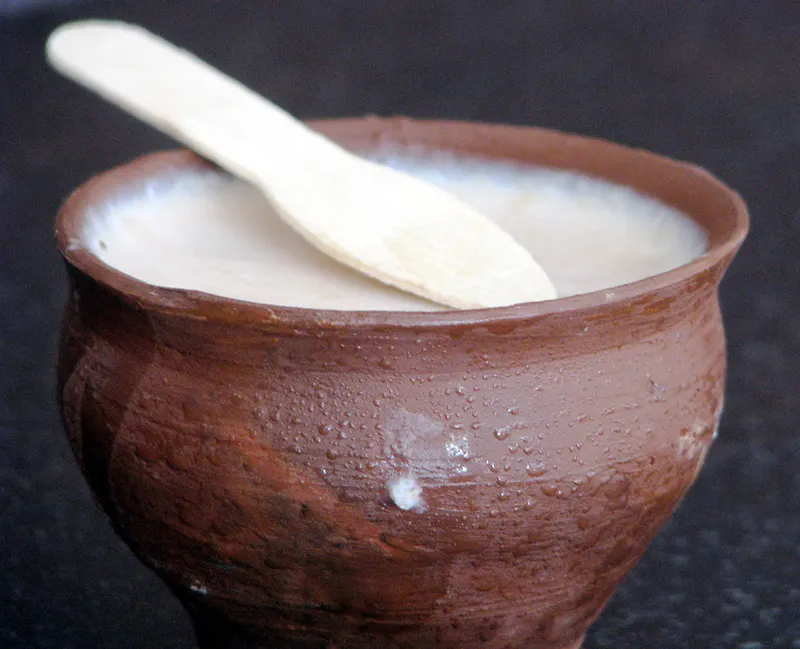
Cow or buffalo milk is boiled with 6 to 6.5 % cane sugar, with caramel or jaggery added if wanted, then cooled to 40–45 °C and seeded with the previous day's curd. It incubates for 12–15 hours in earthenware pots placed near the milk shop's open fire and sets into a firm, sweet curd.
What changes:Sugar goes into the milk and it is boiled
Step 1 of 4
Sweeten and boil the milk
Time
Not documented
Temperature
Not documented
Salt
None given
Acidity
Not documented
Which microbes the steps name, step by step
Lactic acid bacteria
Output: sweetened boiled milk.
Flavour
cooked, sweet milk
Texture
Not documented
Colour
Not documented
Microbes at work in this step
boiling kills the raw-milk flora
Method
Measured measured in a studySet fixed by a specification or tested recipeReported one source reports itTypical a general value, not sourced for this fermentUnconfirmed not yet checked against a source
At a glance
Cow or buffalo milk is boiled with 6 to 6.5 % cane sugar, with caramel or jaggery added if wanted, then cooled to 40–45 °C and seeded with the previous day's curd. It incubates for 12–15 hours in earthenware pots placed near the milk shop's open fire and sets into a firm, sweet curd. Made in 4 steps over 12 h – 15 h. The longest step, pour into earthen pots and incubate, takes 12–15 h (FAO 1990) and runs at 40–45 °C (FAO 1990). Leuconostoc mesenteroides, abundant in back-slopped Tripura mishti dahi does most of the fermenting.
Mishti doi is a sweetened dahi. Cane sugar goes in before boiling, it may be coloured, and the earthenware pots are held warm near the shop's open fire while it sets.
Tripura home mishti dahiMilk boiled with up to 10 % sugar and left 1–2 days at room temperature.
Laboratory fibre-fortified misti dahiIn an NDRI study, buffalo milk with 14 g/100 mL cane sugar and 0.1 g/100 mL caramel was pasteurised at 90 °C for 10 min, cooled to 45 °C, seeded with 2 g/100 mL of a Streptococcus thermophilus and Lactobacillus bulgaricus culture and incubated at 42 ± 1 °C for about 5–6 h, until the acidity reached 1 % lactic acid (Raju and Pal 2014).