Side-by-side or overlay PDF diff driven by one engine that reads each file into a structured model — text, vector geometry, images, form fields, annotations — and compares the models. Moves show as moves, edits show only where they happened, and any PDF type works without picking a mode.
Open a STEP / STP part and it measures itself — volume, thinnest wall, draft and undercut checks on load, plus hole detection with a BOM. Measure, section, export STL. Rust + WASM B-rep kernel, runs in your browser.
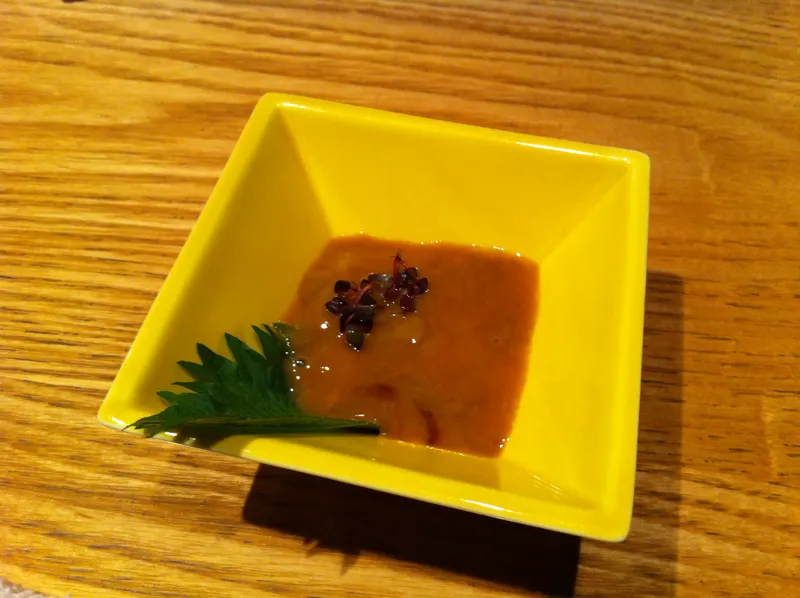
Konowata is the gut of the sea cucumber, cleaned of sand, rinsed in seawater and mixed with a little over 10 % salt. After two or three days in salt it is ready to eat, a soft, briny shiokara counted among Japan's three great delicacies. Modern shop samples are much less salty.
Total time across the recorded steps: 4 days – 5 days
Start
Drag the bar or press Play
What changes:Starting material: live sea cucumbers in a sea pen, emptying out their sand
Step 1 of 4
Let the sea cucumbers empty their guts
Time
2 days
Reported
Temperature
Not documented
Salt
None given
Acidity
Not documented
Nanao Bay sea cucumbers are fished from early November to mid-April. Output: sea cucumbers that have spat out sand and mud.
Flavour
Not documented
Texture
Not documented
Colour
Not documented
Microbes at work in this step
Not documented for this step.
Method
Measured measured in a studySet fixed by a specification or tested recipeReported one source reports itTypical a general value, not sourced for this fermentUnconfirmed not yet checked against a source
At a glance
Konowata is the gut of the sea cucumber, cleaned of sand, rinsed in seawater and mixed with a little over 10 % salt. After two or three days in salt it is ready to eat, a soft, briny shiokara counted among Japan's three great delicacies. Modern shop samples are much less salty. Made in 4 steps over 4 days – 5 days. The longest step, rinse, drain and salt, takes 2–3 days (Kakiuchi K 2012). Salt is at least 10 % (Kakiuchi K 2012).
Unlike squid shiokara, konowata is only salted gut, with no flesh, and it is ready in two or three days. The same animals also give kuchiko (dried gonads) and iriko (boiled, dried sea cucumber).
KuchikoThe gonads from the same animals, hung on cords in a triangle and sun-dried.
Konowata-zakeHot sake poured over konowata.
Safety
Shop salted seafoods now fall into low-salt (about 5 %) and high-salt (10 % or more) groups. Low-salt squid shiokara must be kept refrigerated, and Vibrio parahaemolyticus is the named food-poisoning risk. The shop konowata tested had only 3.7 % salt, so keep it cold.
Hazards the sources name: Vibrio parahaemolyticus, a named risk in low-salt (about 5 %) salted seafoods.
Konowata appears among Noto Province's goods in the Heian-period Engishiki. Noto's Hatakeyama lords sent konowata tubs to the Ashikaga shoguns, the 1603 Japanese–Portuguese dictionary lists "Cono vata", and the Maeda of Kaga sent Nakai konowata to the Tokugawa shoguns.
Starter
The sources we found do not say how its fermentation begins.