Side-by-side or overlay PDF diff driven by one engine that reads each file into a structured model — text, vector geometry, images, form fields, annotations — and compares the models. Moves show as moves, edits show only where they happened, and any PDF type works without picking a mode.
Open a STEP / STP part and it measures itself — volume, thinnest wall, draft and undercut checks on load, plus hole detection with a BOM. Measure, section, export STL. Rust + WASM B-rep kernel, runs in your browser.
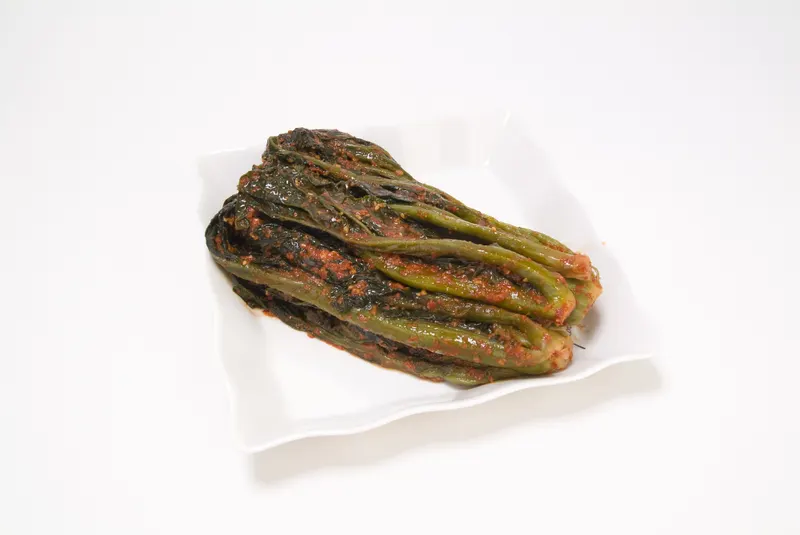
Gat kimchi is made from Korean leaf mustard (Brassica juncea), salted in brine and coated with chilli powder, garlic, ginger, glutinous rice paste and anchovy sauce. Its main pungent volatile is allyl isothiocyanate, which falls as the kimchi ripens, and in a 1995 trial it ripened slowly in the cold.
Total time across the recorded steps: 6.2 days – 3.2 months
Start
Drag the bar or press Play
What changes:Brine wilts the mustard leaves
Step 1 of 4
Soak the mustard in brine
Time
3 h
Reported
Temperature
Not documented
Salt
10 %
Reported
Acidity
Not documented
Which microbes the steps name, step by step
L. plantarum
L. mesenteroides
Levilactobacillus brevis
Flavour
Not documented
Texture
Not documented
Colour
Not documented
Microbes at work in this step
Not documented for this step.
Method
Measured measured in a studySet fixed by a specification or tested recipeReported one source reports itTypical a general value, not sourced for this fermentUnconfirmed not yet checked against a source
At a glance
Gat kimchi is made from Korean leaf mustard (Brassica juncea), salted in brine and coated with chilli powder, garlic, ginger, glutinous rice paste and anchovy sauce. Its main pungent volatile is allyl isothiocyanate, which falls as the kimchi ripens, and in a 1995 trial it ripened slowly in the cold. Made in 4 steps over 6.2 days – 3.2 months. The longest step, ripen slowly in the cold, takes 6 days – 3.2 months (박삼수 1995) and runs at 4–20 °C (박삼수 1995). Salt is 10 % (Lee J.-H 2019). Lactiplantibacillus plantarum and Leuconostoc mesenteroides among isolates from pa and gat kimchi that make no biogenic amines and Levilactobacillus brevis, which made tyramine, putrescine and cadaverine in some strains isolated from pa and gat kimchi do most of the fermenting.
In a 1995 trial gat kimchi reached its best ripeness, pH 4.6–4.8, after 78–96 days at 4 °C. Its main volatile is allyl isothiocyanate, the mustard heat, which decreases during fermentation.
In a 2019 survey of 13 market samples, 2 held about two to four times the 100 mg/kg histamine level suggested as safe and 6 were over that level for tyramine. One sample held 720.82 mg/kg putrescine, putting its total biogenic amines over 1,000 mg/kg. Anchovy sauce appeared to be an important source.
Hazards the sources name: Biogenic amines (histamine, tyramine, putrescine), found above suggested limits in some market samples.