Side-by-side or overlay PDF diff driven by one engine that reads each file into a structured model — text, vector geometry, images, form fields, annotations — and compares the models. Moves show as moves, edits show only where they happened, and any PDF type works without picking a mode.
Open a STEP / STP part and it measures itself — volume, thinnest wall, draft and undercut checks on load, plus hole detection with a BOM. Measure, section, export STL. Rust + WASM B-rep kernel, runs in your browser.
Sauces and condiments from Ancient Mediterranean and Atlantic coasts
Garumγάρος (garos, Greek)
Small whole fish and fish guts were mixed with salt, left overnight, then set in the sun in open earthenware pots for two to three months and stirred now and then. The fish's own enzymes turned the flesh to liquid, which was strained off through a basket as garum, leaving a paste called allec.
Fully documentedSauces and condiments2 months – 3 months
Amounts from a sourceThe amounts are the Bithynian recipe in the Geoponika (book 20, chapter 46), in Roman measures as given in Owen's 1806 translation.
Small fish, or a mix of small fish and fish guts1 modius (a dry measure)
The Geoponika names atherinae, small mullets, maenae and lycostomi; anchovy remains were found in the Pompeii garum-shop jars[geoponika][rodriguez2018]
Old wine2 sextarii per sextarius of fish (optional)
Some makers added it, according to the Geoponika[geoponika]
Total time across the recorded steps: 2 months – 3 months
Start
Drag the bar or press Play
What changes:Salt worked into the small fish begins to draw out their juices
Step 1 of 4
Work the fish with salt and leave overnight
Time
One night
Reported
Temperature
Not documented
Salt
12.5 %
Reported
Acidity
Not documented
Output: salted fish mass.
Flavour
Not documented
Texture
Not documented
Colour
Not documented
Microbes at work in this step
Not documented for this step.
Method
Measured measured in a studySet fixed by a specification or tested recipeReported one source reports itTypical a general value, not sourced for this fermentUnconfirmed not yet checked against a source
At a glance
Small whole fish and fish guts were mixed with salt, left overnight, then set in the sun in open earthenware pots for two to three months and stirred now and then. The fish's own enzymes turned the flesh to liquid, which was strained off through a basket as garum, leaving a paste called allec. Made in 4 steps over 2 months – 3 months. The longest step, ripen in the sun, stirring now and then, takes 2–3 months (Geoponika book 20 1806). Salt is 12.5 % (Geoponika book 20 1806).
Garum is the ancient Mediterranean member of the fish-sauce family. Like nam pla it is fish and salt digested by the fish's own enzymes, but the classic recipes ripened it in open pots in the sun for two to three months and strained it through a basket.
LiquamenLatin term for fish sauce that became a generic word for fish sauces; Apicius uses it for the sauce throughout.
Allec (hallec)The paste left after straining; eaten as its own food.
MuriaThe thin, watery brine the salt draws out of the fish; Martial's muria is made from tuna.
HaimationThe best garum in the Geoponika; tuna guts, gills, serum and blood salted for about two months, then tapped from the vessel.
Garum sociorumPremium grade from Carthago Nova (Cartagena), made from mackerel.
Fast boiled garum (Geoponika)Fish boiled in brine strong enough to float an egg, with oregano and sometimes sapa, then strained until clear. Not fermented.
Gargilius Martialis garumOily fish sealed in a jar with dried herbs and salt for seven days; a Cádiz reconstruction used 80 % anchovy, 15 % salt and 5 % spices at 50 ± 5 °C.
Oenogarum, oxygarum, meligarum, hydrogarumGarum mixed with wine, vinegar, honey or water; mixtures, not ferments.
Safety
Ancient garum relied on heavy salt and the sun's heat, and too little salt lets fish rot. Anyone making it today should treat it as fish sauce; Codex asks for at least 200 g/L salt and no more than 40 mg histamine per 100 g. Histamine forms fastest in warm fish, and cooking does not remove it. Raw, lightly salted fish may also carry fish tapeworm, which was common in the Roman world. These steps record Roman practice, not a safe home method.
Hazards the sources name: Fish tapeworm (Diphyllobothrium) was widely present in the Roman world; garum, an uncooked fish sauce, may have helped spread it.
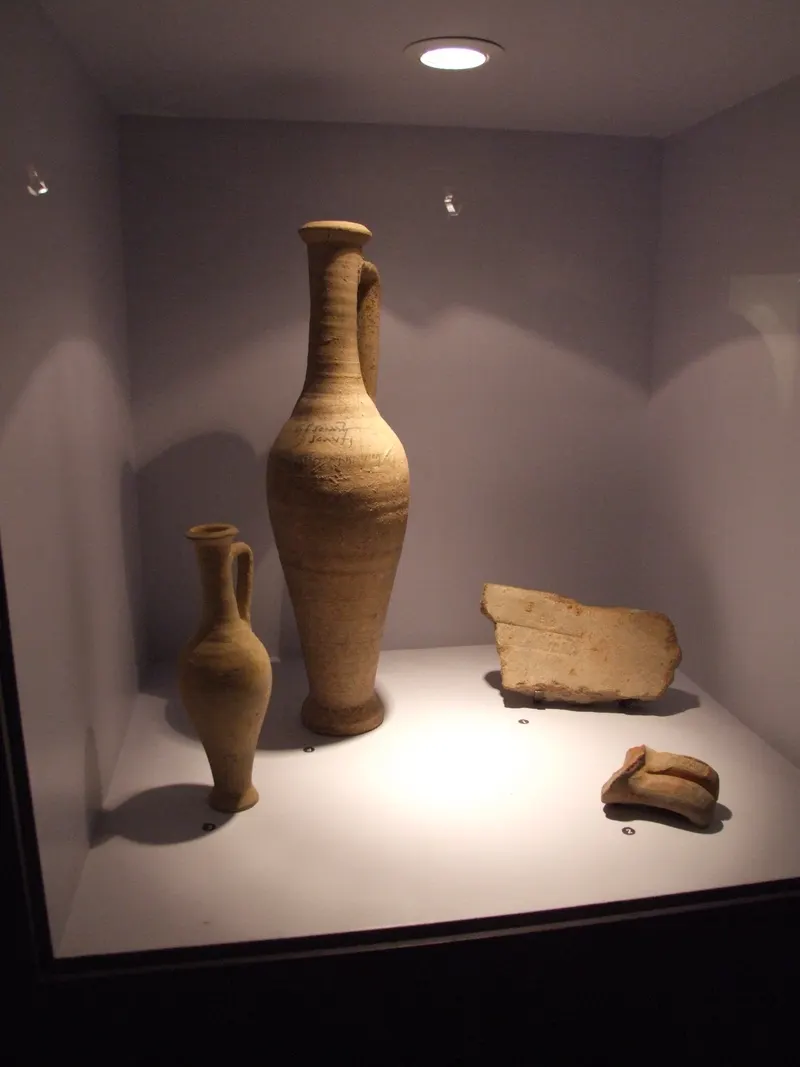
Pliny the Elder, in the 1st century CE, described garum as made from fish guts soaked in salt. The Geoponika, a 10th-century Byzantine farming compilation of older texts, preserves the recipes. Salting works lined the southern coast of Spain, and the largest in the western Mediterranean stood at Lixus, on the Atlantic coast of Mauretania. Pompeii's Garum Shop still held jars of anchovy paste when Vesuvius erupted in 79 CE.
Starter
The sources we found do not say how its fermentation begins.