Side-by-side or overlay PDF diff driven by one engine that reads each file into a structured model — text, vector geometry, images, form fields, annotations — and compares the models. Moves show as moves, edits show only where they happened, and any PDF type works without picking a mode.
Open a STEP / STP part and it measures itself — volume, thinnest wall, draft and undercut checks on load, plus hole detection with a BOM. Measure, section, export STL. Rust + WASM B-rep kernel, runs in your browser.
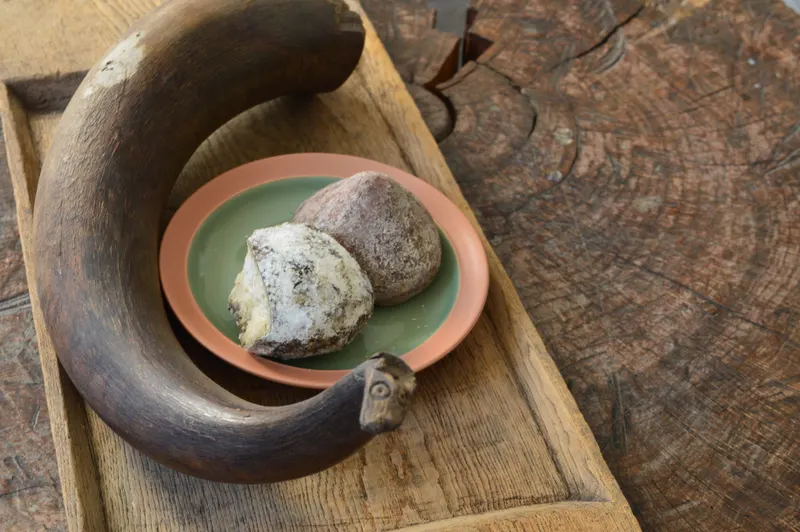
Do, made from cow milk (the registration calls it the whey of cottage cheese; Slow Food and the Georgian tourism administration say it is the curd left after churning butter), is heated to 50–60 °C, squeezed in cloth bags for 10–12 hours, salted and kneaded into balls of 150–250 g. The balls dry for several days in a warm room out of the sun, then ripen 1–2 months in a covered ceramic pot in a cool place, where bacteria of the cultured milk product and penicillin mould ripen it into a piquant, spicy cheese.
Amounts from a sourceThe registration gives no amounts; each ball weighs 150–250 g.
Do, from cow milk
The registration calls it the lactoserum (whey) of cottage cheese; Slow Food and the Georgian National Tourism Administration describe buttermilk cottage cheese left after churning butter, so the sources disagree on what it is[damb-gi][slowfood-damb][gnta-damb]
Total time across the recorded steps: 31 days – 2 months
Start
Drag the bar or press Play
What changes:The shaken do is heated and the cottage cheese separates out
Step 1 of 5
Heat the do
Time
Not documented
Temperature
50–60 °C
Set
Salt
None given
Acidity
Not documented
Which microbes the steps name, step by step
Moulds
Slow Food records that it is usually made in May, when milk yields are highest.
Flavour
Not documented
Texture
Not documented
Colour
Not documented
Microbes at work in this step
Not documented for this step.
Method
Measured measured in a studySet fixed by a specification or tested recipeReported one source reports itTypical a general value, not sourced for this fermentUnconfirmed not yet checked against a source
At a glance
Do, made from cow milk (the registration calls it the whey of cottage cheese; Slow Food and the Georgian tourism administration say it is the curd left after churning butter), is heated to 50–60 °C, squeezed in cloth bags for 10–12 hours, salted and kneaded into balls of 150–250 g. The balls dry for several days in a warm room out of the sun, then ripen 1–2 months in a covered ceramic pot in a cool place, where bacteria of the cultured milk product and penicillin mould ripen it into a piquant, spicy cheese. Made in 5 steps over 31 days – 2 months. The longest step, ripen in a covered pot, takes 30 days – 2 months (Ministry of Agriculture of Georgia 2012). Salt is 2–4 % (Ministry of Agriculture of Georgia 2012). Bacteria of the cultured milk product and Penicillium mould, which ripen the cheese does most of the fermenting.
Registered as a Georgian geographical indication on 24 January 2012. The Georgian National Tourism Administration lists it among the monuments of Georgia's intangible cultural heritage and says its long keeping made it a strategic food that soldiers ate in wartime. Slow Food lists it in the Ark of Taste because the slow method means it is now rarely made.
Starter
The sources we found do not say how its fermentation begins.