Side-by-side or overlay PDF diff driven by one engine that reads each file into a structured model — text, vector geometry, images, form fields, annotations — and compares the models. Moves show as moves, edits show only where they happened, and any PDF type works without picking a mode.
Open a STEP / STP part and it measures itself — volume, thinnest wall, draft and undercut checks on load, plus hole detection with a BOM. Measure, section, export STL. Rust + WASM B-rep kernel, runs in your browser.
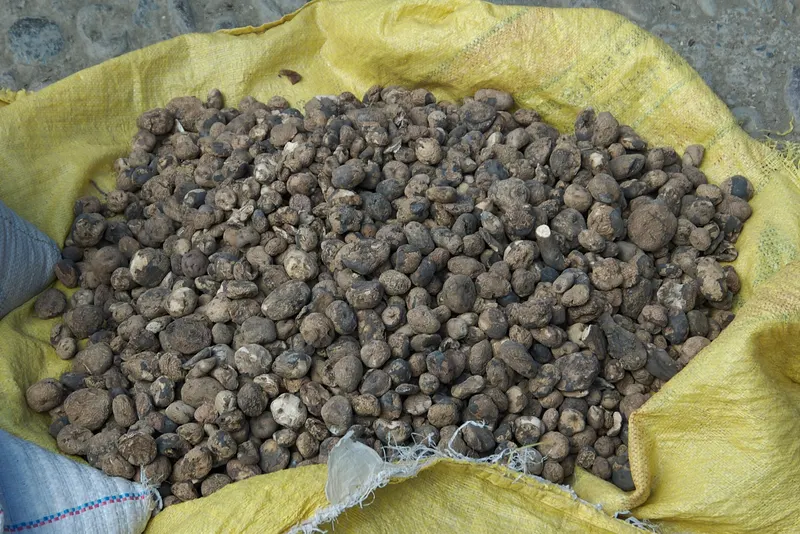
Chuño and tunta (freeze-dried potato) - boundary entrych'uñu
Chuño is potato preserved by freezing it outdoors at night, thawing it in the sun, trampling out the water and drying it, which is a physical process, not a fermentation. Black chuño is dried without washing. White chuño, called tunta, also soaks for weeks in running water, which leaches out bitter glycoalkaloids before it is dried white; no study has shown microbes doing this work.
No fixed amounts recordedField practice with no fixed amounts.
Potatoes
Bitter, frost-hardy kinds are the ones whose glycoalkaloids are leached out[valdivieso2026]
Running water
For tunta only; a pond or pool fed by a stream[cocarico2026]
Total time across the recorded steps: 24 days – 33 days
Start
Drag the bar or press Play
What changes:Potatoes freeze outdoors at night and thaw in the sun by day
Step 1 of 5
Spread the potatoes out for night frost
Time
3 days
Reported
Temperature
-16–-1 °C
Reported
Salt
None given
Acidity
Not documented
Output: frozen and thawed potatoes.
Flavour
Not documented
Texture
tubers go soft and watery on thawing
Colour
Not documented
Microbes at work in this step
none; ice crystals break the cells
Method
Measured measured in a studySet fixed by a specification or tested recipeReported one source reports itTypical a general value, not sourced for this fermentUnconfirmed not yet checked against a source
At a glance
Chuño is potato preserved by freezing it outdoors at night, thawing it in the sun, trampling out the water and drying it, which is a physical process, not a fermentation. Black chuño is dried without washing. White chuño, called tunta, also soaks for weeks in running water, which leaches out bitter glycoalkaloids before it is dried white; no study has shown microbes doing this work. Made in 5 steps over 24 days – 33 days. The longest step, tunta: soak in running water, takes 21–30 days (Cocarico S 2026).
This is a boundary entry. Chuño is preserved by frost, pressing and drying, and tunta adds weeks in water fed by running water, which leaches and washes it. Tocosh is a separate entry for Andean potato left in water on purpose. A household variant soaked in still water gives a darker, lead-gray product (Cocarico).
Moraya (muraya)Frozen potato soaked in semi-stagnant rather than running water, as its own entry sets out.
Household still-water tuntaA household variant of tunta submerged in still rather than running water gives a darker, lead-gray product (Cocarico).
KayaThe same freeze and soak method applied to oca, with water before or after freezing.
Safety
Soaking for tunta leaches part of the bitter glycoalkaloids from bitter potatoes into the water. Black chuño, which is not soaked, keeps some bitterness. These glycoalkaloids are toxic. An intake of 1 mg per kg of body weight or more can bring on vomiting, diarrhoea and stomach pain, and ordinary potatoes that taste bitter have measured 250–800 mg/kg (EFSA 2020). Boiling peeled potatoes removes only 5–65 %, so cooking alone is not enough for bitter tubers. No source read measures them in finished chuño or tunta, and leaching takes weeks, so do not eat bitter potatoes without this processing.
Hazards the sources name: Potato glycoalkaloids, high in the bitter Andean potatoes used and partly leached out in the tunta soak (plant toxins, not microbes).