Side-by-side or overlay PDF diff driven by one engine that reads each file into a structured model — text, vector geometry, images, form fields, annotations — and compares the models. Moves show as moves, edits show only where they happened, and any PDF type works without picking a mode.
Open a STEP / STP part and it measures itself — volume, thinnest wall, draft and undercut checks on load, plus hole detection with a BOM. Measure, section, export STL. Rust + WASM B-rep kernel, runs in your browser.
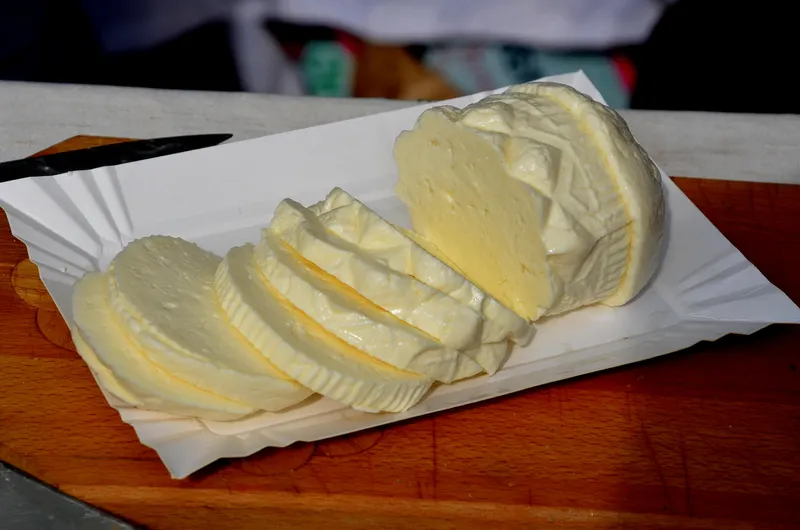
Ewe milk is warmed in a cauldron over the hut fire and set with rennet, and the curd is gathered into a linen cloth to drip. The result is bundz, a soft, sweet, loaf-shaped fresh cheese with small holes. Shepherds shape it into oscypek, or leave it about two weeks to sour and grind it with salt into bryndza.
No fixed amounts recordedA traditional shepherds' cheese; the sources used here give no recipe amounts. The milk of each milking is made into cheese straight away during the grazing season, May to September.
Traditionally calf stomach contents in water; now commercial rennet[ceklarz2023]
Total time across the recorded steps: 14 days
Start
Drag the bar or press Play
What changes:Ewe milk is warmed over the fire and rennet is stirred in to set it
Step 1 of 4
Warm the milk and add rennet
Time
Not documented
Temperature
Not documented
Salt
None given
Acidity
Not documented
Which microbes the steps name, step by step
L. mesenteroides
Levilactobacillus brevis
Output: set milk.
Flavour
Not documented
Texture
Not documented
Colour
Not documented
Microbes at work in this step
Not documented for this step.
Method
Measured measured in a studySet fixed by a specification or tested recipeReported one source reports itTypical a general value, not sourced for this fermentUnconfirmed not yet checked against a source
At a glance
Ewe milk is warmed in a cauldron over the hut fire and set with rennet, and the curd is gathered into a linen cloth to drip. The result is bundz, a soft, sweet, loaf-shaped fresh cheese with small holes. Shepherds shape it into oscypek, or leave it about two weeks to sour and grind it with salt into bryndza. Made in 4 steps over 14 days. The longest step, leave to sour (towards bryndza), takes 14 days (Ceklarz K. 2023). Leuconostoc mesenteroides and Levilactobacillus brevis does most of the fermenting.
Bundz is the fresh curd at the start of the Podhale chain. Shaped by hand, soaked in brine and hot water, and smoked, it becomes oscypek; soured for two weeks, ground and salted it becomes bryndza.
Milk
Ewe milk; the related PDO cheeses oscypek and bryndza allow up to 40 % Polish Red cow milk
Ripening
Eaten fresh; or soured about two weeks for bryndza
Made from raw milk in summer huts. The one bundz sample in a Polish study carried Listeria monocytogenes DNA. The method, PCR-DGGE, does not tell live cells from dead, and the study did not count Listeria. It is a perishable cheese. The sources we read do not show that keeping it cold or eating it soon removes Listeria. CDC says people at higher risk, including pregnant women, people 65 or older and people with weak immunity, should avoid raw-milk cheese unless it is heated to 165 °F (74 °C) or until steaming hot.
Hazards the sources name: Listeria monocytogenes DNA detected by PCR-DGGE, which does not tell live cells from dead, in the one Podhale bundz sample studied.
Bundz was entered on Poland's list of traditional products in 2005 (10 October 2005, in Małopolska). Ceklarz links the mountain shepherding behind the Podhale cheeses to the Vlach settlement of the 15th and 16th centuries. The Bryndza Podhalańska application says the earliest records of Podhale sheep cheese date from 1527, and that documents from 1683 show it was used as payment and was part of feudal dues. Bundz from the spring grazing, up to St John's night, is traditionally the most prized and has its own name, bundz majowy (May bundz).
Starter
The sources we found do not say how its fermentation begins.